Aston Martin DB5 Goldfinger Continuation Customer Cars
The DB5 Goldfinger Continuation customer programme recreates the film-associated DB5 through new Works construction and functioning theatrical gadgets. Twenty-five customer cars were allocated, separate from three additional retained or charity cars. The first customer car’s completion and the start of deliveries were confirmed in July 2020.
The DB5 Goldfinger Continuation customer programme recreates the film-associated DB5 through new Works construction and functioning theatrical gadgets. Twenty-five customer cars were allocated, separate from three additional retained or charity cars. The first customer car’s completion and the start of deliveries were confirmed in July 2020.
Aston Martin DB5 Goldfinger Continuation Customer Cars at a glance
| Manufacturer | Aston Martin |
|---|---|
| Model / family | DB5 |
| Profile scope | Factory Goldfinger continuation customer programme archive |
| Historical reference year | 2020 |
| Inventory reference | AST-149 |
| Factory allocation limit | 25; completed census not independently certified |
| Combined parent allocation limit | 28; count scope discussed below |
| Documented customer delivery year | 2020; not an inferred production-start year |
| Historical engine reference | 4.0-litre naturally aspirated straight-six; Goldfinger continuation programme |
A newly built DB5 with an officially defined brief
The Goldfinger Continuation is a modern manufacturer project developed with EON Productions. Its identity comes from new construction and the film-inspired specification, rather than from a claim that a particular car was built or used for the 1964 production. That distinction is essential to a collector archive. A new continuation can have a direct official relationship with the Bond story while retaining its own modern chassis history. Original film cars, historic customer DB5s and later replicas belong to separate documentary categories.
Rarity: twenty-five customer allocations
The manufacturer defined twenty-five cars for customers and separately planned three further cars for retained or charity purposes. This entry uses the customer allocation of twenty-five. It does not claim a newly audited completed census of every chassis or combine the non-customer allocation into the same sales population. The distinction explains why both twenty-five and twenty-eight can appear in discussions of the broader plan. A profile should state which population it describes so that a small production number remains informative instead of becoming ambiguous.
Announcement in 2018, customer completion in 2020
The project was announced in August 2018. The July 6, 2020 factory release confirms the first customer car had been completed and deliveries had commenced. The inventory’s 2020 reference is therefore useful as a customer-build milestone, while the earlier announcement belongs in the chronology. Do not assign that first-car date to every example or infer a complete production end date from the same release. An individual build and handover record provides the necessary precision for the actual car being catalogued.
Works construction and the continuation lineage
The project followed earlier continuation work at Newport Pagnell, bringing new cars into a setting closely connected with DB5 history. That manufacturer relationship is part of its significance, but the cars remain modern builds. Document the actual Works chassis identity and delivery record instead of borrowing an original DB5’s provenance. This allows the continuation’s craftsmanship and engineering to stand on their own. The collecting story becomes clearer when readers can distinguish the institution and place from the age and individual history of the vehicle.
Silver Birch presentation and the film reference
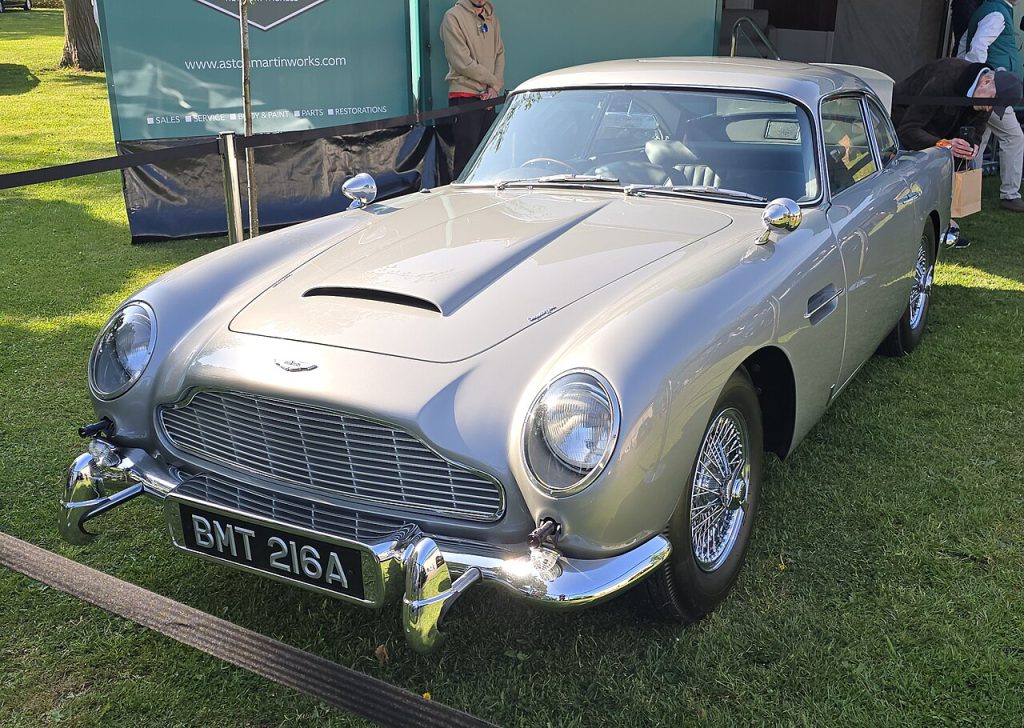
The factory programme specifies Silver Birch exterior paint as part of the recreated presentation. That color is an important reference, but a silver DB5 alone does not establish Goldfinger Continuation membership. Authentication should connect the chassis, Works documentation and actual equipment. A photograph can illustrate the overall form and recognizable styling, while original records show the programme identity. Keep later repair, repainting and finishing work in the car’s dated history, so readers can understand how the current appearance relates to the delivered specification.
Gadgets combine engineering with theatrical simulation
The project’s gadgets were developed with film effects expertise, including Chris Corbould. Some devices recreate a screen effect through simulation, so their descriptions should preserve that distinction. A simulated machine-gun effect is not a live weapon, and the published specification should not be inflated into a claim of a functioning ejector seat. The collecting appeal concerns the ingenuity of the recreation. A specialist demonstration and equipment record can explain the actual installed systems without treating every memorable scene from the film as hardware supplied in the car.
Optional equipment and actual gadget completeness
The first-customer release lists a removable passenger roof panel as optional equipment. A missing optional item should therefore be assessed against the original order, not against a universal checklist inferred from a launch display. Record the remote controls, instructions and retained accessories that accompany the vehicle. Gadget function and gadget presence are separate questions. A complete-looking exterior may conceal equipment needing service, while a car presented without all loose items in its photographs may still retain them in its documented collection.
The six-cylinder mechanical programme
The 2020 factory release identifies a 4.0-litre straight-six and five-speed ZF manual, with output described in approximate terms around 290 bhp. Preserve the approximation instead of making it an exact tested figure for every car. The mechanical arrangement supplies a familiar historic-style foundation beneath the theatrical equipment. Assess the actual engine, driveline and service history alongside the gadgets. A successful demonstration of rotating plates or lights does not establish that the underlying car is ready for the owner’s intended use.
The factory launch-use limitation
The manufacturer expressly stated that the continuation was not road legal at launch, with gadget fitment subject to country-specific requirements. Keep that original programme description visible. A period-style number plate, a display appearance or a photograph taken outdoors does not establish present registration status. Any later permitted-use claim needs documentation for the individual car and location. The archive can explain the factory’s intended scope without substituting a general legal assumption for the actual records of a later conversion or approval.
Authentication separates the different DB5 categories
Begin with Works identity and original build or delivery records. Reconcile the chassis and installed equipment with the customer programme, then record subsequent changes. Film provenance, historical chassis age and continuation membership are different claims. An advertisement using Bond language should identify which one it can support. This process protects the significance of historic originals while also giving the continuation an accurate account of its own official origin, craftsmanship and developing history. A replica should not receive the same factory identity from styling alone.
Inspection of mechanical and demonstration systems
A collector inspection should cover the engine, driveline, body, braking equipment and the electrical and mechanical systems supporting the gadgets. Ask for records of servicing, storage and demonstrations. These are assessment priorities, not asserted defects common to every car. Obtain operating instructions and document which systems were tested, on what date and under what conditions. For a vehicle often presented as a display object, the distinction between attractive appearance and verified function is particularly useful when planning maintenance or an exhibition.
A dated auction example and the supplied photograph
RM Sothebys’ Monterey 2026 catalogue identifies chassis DB500702R and provides a dated account of a customer-programme example. That single-car record does not certify the entire series or the identity of the separately supplied photograph. The bundled Commons image is source-identified as a Goldfinger Continuation programme car photographed in April 2025. Its caption leaves customer-allocation membership unassigned. Keeping those records separate supplies both a real illustration and a useful catalogue reference without merging unrelated cars into an invented provenance trail.
Frequently asked questions
How many Goldfinger Continuations were allocated to customers?
Twenty-five. The factory also announced three further retained or charity allocations, which are treated separately.
Are these the actual cars used in the 1964 film?
No. The customer programme consists of modern Works-built continuations inspired by the film car. Individual screen-use claims require separate provenance.
Did the programme include an actual ejector seat?
The factory equipment list identifies a removable passenger roof panel as an option, not a functioning ejector seat. Theatrical effects should be described accurately.
When did customer deliveries begin?
The July 6, 2020 manufacturer release confirms completion of the first customer car and that deliveries had commenced. It does not establish every car’s handover date.
Explore related Aston Martin profiles
- Aston Martin DB5 Goldfinger Continuation Retained / Charity Cars
- Aston Martin DB4 GT Zagato Continuation
- Aston Martin DBS Superleggera OHMSS Edition
Sources
- Aston Martin: Goldfinger DB5 announcement, 20 August 2018, twenty-five customers and three additional allocations
- Aston Martin: first customer Goldfinger DB5 completed and deliveries commenced, 6 July 2020
- Aston Martin Works: Goldfinger DB5 Continuation programme
- Aston Martin: Goldfinger gadget development update, 14 May 2019
- RM Sothebys: 2020 DB5 Goldfinger Continuation, Monterey 2026, chassis DB500702R; dated catalogue reporting
Historical claims follow the linked manufacturer, archive, specialist and catalogue records, with disputed findings retained. Inspection and collecting guidance is editorial analysis. Catalogue condition and custody statements remain dated to their sources.
Photography and credit
Programme illustration: source-identified DB5 Goldfinger Continuation photographed in April 2025. Customer allocation membership and individual chassis are not established by the image. Photo: Calreyn88 / Wikimedia Commons · CC BY-SA 4.0. Wikimedia thumbnail resized from original; no cropping or colour changes.
Why this machine matters
The DB5 Goldfinger Continuation customer programme recreates the film-associated DB5 through new Works construction and functioning theatrical gadgets. Twenty-five customer cars were allocated, separate from three additional retained or charity cars. The first customer car’s completion and the start of deliveries were confirmed in July 2020.
Built in limited numbers
The manufacturer defined twenty-five cars for customers and separately planned three further cars for retained or charity purposes. This entry uses the customer allocation of twenty-five. It does not claim a newly audited completed census of every chassis or combine the non-customer allocation into the same sales population. The distinction explains why both twenty-five and twenty-eight can appear in discussions of the broader plan. A profile should state which population it describes so that a small production number remains informative instead of becoming ambiguous.
Gallery
Specifications
Factory specifications may vary by model year, market and configuration.
Identity & production
- Official model
- Aston Martin DB5 Goldfinger Continuation Customer Cars
- Base model
- DB5
Powertrain & performance
- Engine
- 4.0-litre naturally aspirated straight-six; Goldfinger continuation programme