Aston Martin Vantage GT12 Roadster
The Vantage GT12 Roadster is a unique Q by Aston Martin commission unveiled at Goodwood in June 2016. It adapted the GT12 performance idea to an open car through dedicated bodywork and chassis development. Its importance comes from the complete bespoke project, rather than simply applying a coupe’s name and production count to a convertible.
The Vantage GT12 Roadster is a unique Q by Aston Martin commission unveiled at Goodwood in June 2016. It adapted the GT12 performance idea to an open car through dedicated bodywork and chassis development. Its importance comes from the complete bespoke project, rather than simply applying a coupe’s name and production count to a convertible.
Aston Martin Vantage GT12 Roadster at a glance
| Manufacturer | Aston Martin |
|---|---|
| Model / family | Vantage |
| Profile scope | Factory one-off road-car archive |
| Historical reference year | 2016 |
| Inventory reference | AST-131 |
| Original series total | 1 — Single documented factory Vantage GT12 Roadster commission |
| Historical engine reference | Naturally aspirated V12; period 600 PS programme reference |
An individual commission with its own identity
The factory’s 2017 account of Q Commission identifies the GT12 Roadster as a one-off open version of the GT12 idea. That makes its archive scope unusually clear: this is an individual factory project, rather than a retail edition available in a selection of bodies. The distinction matters when an advertisement uses language such as unique or bespoke. An unusual color on a regular Roadster is a different kind of individuality. Here the documented identity concerns the complete car and the work involved in creating it, so its historical record should remain anchored to that original commission.
Rarity: one commissioned Roadster
The supported count is one for the documented GT12 Roadster project. It does not establish that Aston Martin made only one open V12 Vantage, nor does it require changing the original GT12 coupe series into a 101-car body programme. Keeping the commission separate makes both profiles easier to understand. An archive can connect their engineering stories without merging their populations. For a collector, the useful question is how the surviving car relates to its factory brief and subsequent history, rather than whether any other Aston Martin happens to share its engine layout or an exterior color.
Goodwood in June 2016
The specialist history places the public reveal at the Goodwood Festival of Speed in June 2016. The contemporary manufacturer release, reproduced in an archive, dates it to June 24 and describes a nine-month development and delivery process. The chronology gives the project a defined public reference point without assigning a current location or owner. Later show appearances should be treated as dated events in the car’s history. A photograph taken years afterwards is valuable, but it cannot independently establish that the photographed specification remained unchanged from the Goodwood presentation.
What Q Commission added to the story
Aston Martin’s 2017 explanation distinguishes a close customer collaboration from choosing individual colors and trim. The Roadster demonstrates that broader commissioning ambition: the engineering brief and the form of the car become part of the conversation. It is an instructive example of how a manufacturer can expand a familiar product family through one customer’s project. The significance is not that normal factory cars lacked craftsmanship, but that the scope of intervention was different. A complete archive should retain design and development evidence alongside the delivery record and later service history.
A Roadster-specific starting point
Cottingham identifies a V12 Vantage S Roadster chassis as the foundation, with unique carbon panels and its own suspension setup. That detail prevents the misleading shorthand that the project merely removed the roof from a completed GT12 coupe. A closed body and an open body bring different packaging and structural considerations, so the actual starting point deserves to be preserved. Someone cataloguing the vehicle should distinguish its donor architecture, completed factory identity and any later alterations. Those layers explain the engineering lineage without reducing a genuinely commissioned car to an ordinary aftermarket conversion.
V12 power and seven-speed Sportshift III
The reproduced period release describes a 600 PS naturally aspirated V12 with seven-speed Sportshift III. The gearbox is an automated manual, so its paddle controls should not be used to label it as a conventional manual or a dual-clutch unit. Its mechanical connection with the coupe does not authorize copying all coupe performance figures into this open-car record. Retain Roadster-specific published figures only when their source and units are clear. That is particularly useful for a one-off, where familiar family specifications can otherwise make an apparently complete technical table more confident than the evidence supports.
Carbon panels and a different rear treatment
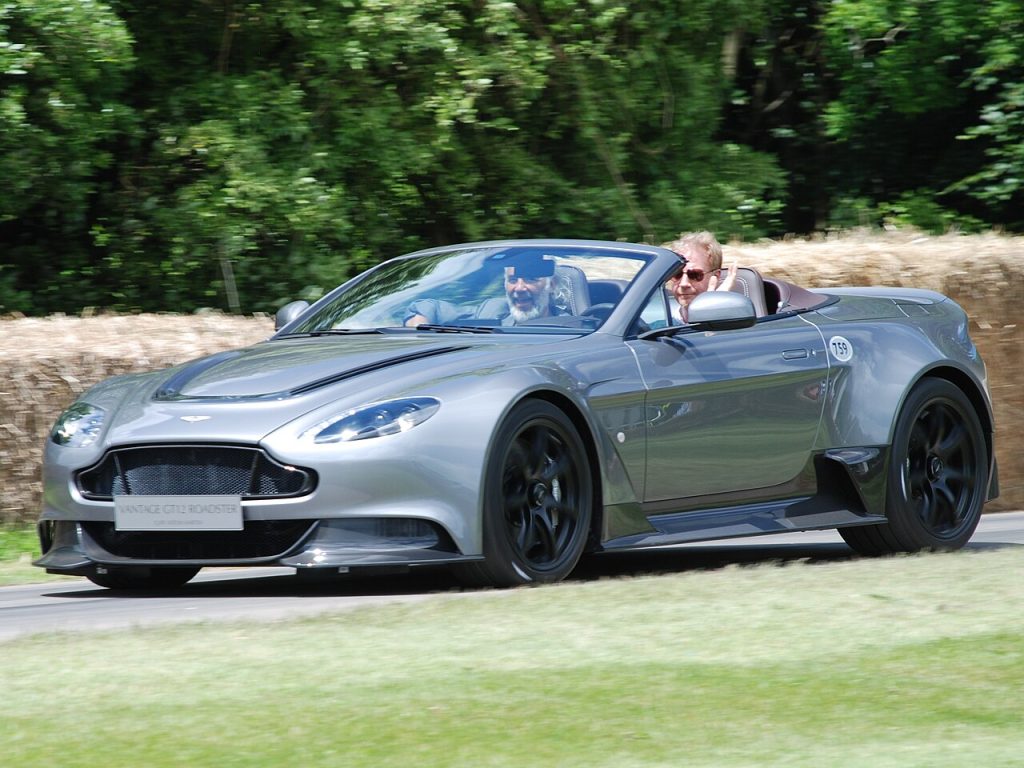
The specialist account emphasizes dedicated carbon body panels and notes that the Roadster does not carry the coupe’s enormous rear wing. Its visual identity therefore depends on more than whether a large spoiler is visible. The open cabin changes the relationship between roofline, rear deck and side profile, while the front treatment preserves the connection with the GT12 theme. This is design interpretation, not a claim that the bundled image provides structural measurements. A detailed photographic archive would benefit from both overall views and close records of the unique panels, junctions and rear treatment.
Why the coupe comparison is useful
The GT12 coupe gives readers a direct way to understand the source idea, but the Roadster asks a different ownership question. Someone fascinated by the open car may value the commission itself, the change in form or the documentary trail of its development. Someone considering the coupe may instead be comparing individual cars within a defined customer series. Neither enquiry is answered by assigning the smaller number a universal superiority. Rarity tells us about the population, while the reasons for collecting concern engineering, design, use and provenance. The related profile keeps those discussions connected.
How it relates to the wider Q projects
The Spitfire 80 and Blades editions provide other ways to explore Aston Martin’s bespoke work, through tightly bounded dealer-led themes. The Roadster takes that interest in a different direction with a single engineering commission. Connecting them helps explain the breadth of Q without claiming that every project used the same development process. When comparing cars, identify the actual commissioned scope and source, then look at what was retained in the completed vehicle. A collection of Q-related badges alone would not establish equivalent rarity, engineering intervention or historical importance across these subjects.
Documenting a one-off without inventing its present story
A responsible history begins with factory project documentation and dated public appearances, then adds verified delivery, service and custody information as it becomes available. Leave present ownership and location unset when a reliable current record has not been retrieved. That approach makes the profile usable as an encyclopedia entry instead of a speculative account of a private car. It also leaves room to record later restoration or modifications properly. One-off status describes the original commission, but does not freeze every component in the same condition or configuration for the rest of the car’s life.
Preservation and specialist assessment
For an individual factory project, a specialist assessment should identify the unique panels, retained chassis hardware, original calibration evidence and any replacement components. Ask how work on project-specific parts was documented, and whether original drawings or factory correspondence accompany the vehicle. These are practical research priorities rather than claims of known defects. A useful preservation plan also considers how the car will be stored, transported and photographed, so fragile details are not overlooked in pursuit of a dramatic display. The aim is to retain the identity and history of the commission while supporting responsible use.
A real photograph with an explicit source trail
The bundled photograph comes from the 2016 Goodwood Festival of Speed and is credited to its photographer under the Commons source license. Its date places the image at the public reveal period, making it more helpful than a generic V12 Vantage Roadster illustration. The caption keeps the event and source attached to the picture, rather than presenting it as a current condition report. An exterior image still cannot replace chassis documentation. When sharing it with a profile, retain the photographer link, original file page, license and resizing disclosure so its history remains traceable.
Frequently asked questions
How many GT12 Roadsters were commissioned?
Aston Martin identifies the GT12 Roadster as a one-off Q commission. That count concerns this specific project.
When was it unveiled?
The car appeared at the Goodwood Festival of Speed in June 2016; the contemporary release dates the reveal to June 24.
Was it simply a GT12 coupe with the roof cut off?
The specialist history describes a V12 Vantage S Roadster chassis with dedicated carbon bodywork and its own suspension setup.
Can the coupe’s performance figures be assigned to it?
They should not be copied without a Roadster-specific source. Shared engine or gearbox architecture does not establish identical performance.
Explore related Aston Martin profiles
- Aston Martin Vantage GT12
- Aston Martin V12 Vantage S Spitfire 80 Edition
- Aston Martin V8 Vantage S Blades Edition
Sources
- Aston Martin March 2017: Q Commission capabilities and the one-off GT12 Roadster
- Tim Cottingham: Vantage GT12 Roadster, June 2016 Goodwood debut and Roadster-specific chassis
- Aston Martin June 2016 GT12 Roadster announcement, reproduced by MyAutoWorld
Historical claims follow the linked manufacturer, archive, specialist and catalogue records, with disputed findings retained. Inspection and collecting guidance is editorial analysis. Catalogue condition and custody statements remain dated to their sources.
Photography and credit
Vantage GT12 Roadster photographed at the Goodwood Festival of Speed on June 24, 2016. Event image matched against the period factory reveal; no current custody or condition inferred. Photo: Matthew Lamb / Wikimedia Commons · CC BY-SA 2.0. Wikimedia thumbnail resized from original; no cropping or colour changes.
Why this machine matters
The Vantage GT12 Roadster is a unique Q by Aston Martin commission unveiled at Goodwood in June 2016. It adapted the GT12 performance idea to an open car through dedicated bodywork and chassis development. Its importance comes from the complete bespoke project, rather than simply applying a coupe’s name and production count to a convertible.
Built in limited numbers
The supported count is one for the documented GT12 Roadster project. It does not establish that Aston Martin made only one open V12 Vantage, nor does it require changing the original GT12 coupe series into a 101-car body programme. Keeping the commission separate makes both profiles easier to understand. An archive can connect their engineering stories without merging their populations. For a collector, the useful question is how the surviving car relates to its factory brief and subsequent history, rather than whether any other Aston Martin happens to share its engine layout or an exterior color.
Gallery
Specifications
Factory specifications may vary by model year, market and configuration.
Identity & production
- Official model
- Aston Martin Vantage GT12 Roadster
- Base model
- Vantage
- Worldwide production
- 1
Powertrain & performance
- Engine
- Naturally aspirated V12; period 600 PS programme reference