2018 Lamborghini Aventador SVJ
Explore 2018 Lamborghini Aventador SVJ: history, specifications, rarity evidence and credited photography.
The Lamborghini Aventador SVJ defines a later stage of the V12 coupé through a named limited programme and active aerodynamics. Its record keeps the standard SVJ distinct from the SVJ 63 commemorative edition.
Origins and the correct historical identity
Lamborghini’s authorised pre-owned model record dates SVJ to 2018 and identifies a 900-example production limit. The SVJ 63 is described separately as a 63-example special edition. This profile uses the standard SVJ scope without adding the special edition a second time to create a claimed reconciled whole-family total. The original model page names the aerodynamic system ALA 2.0.
Design: what makes Aventador SVJ distinctive
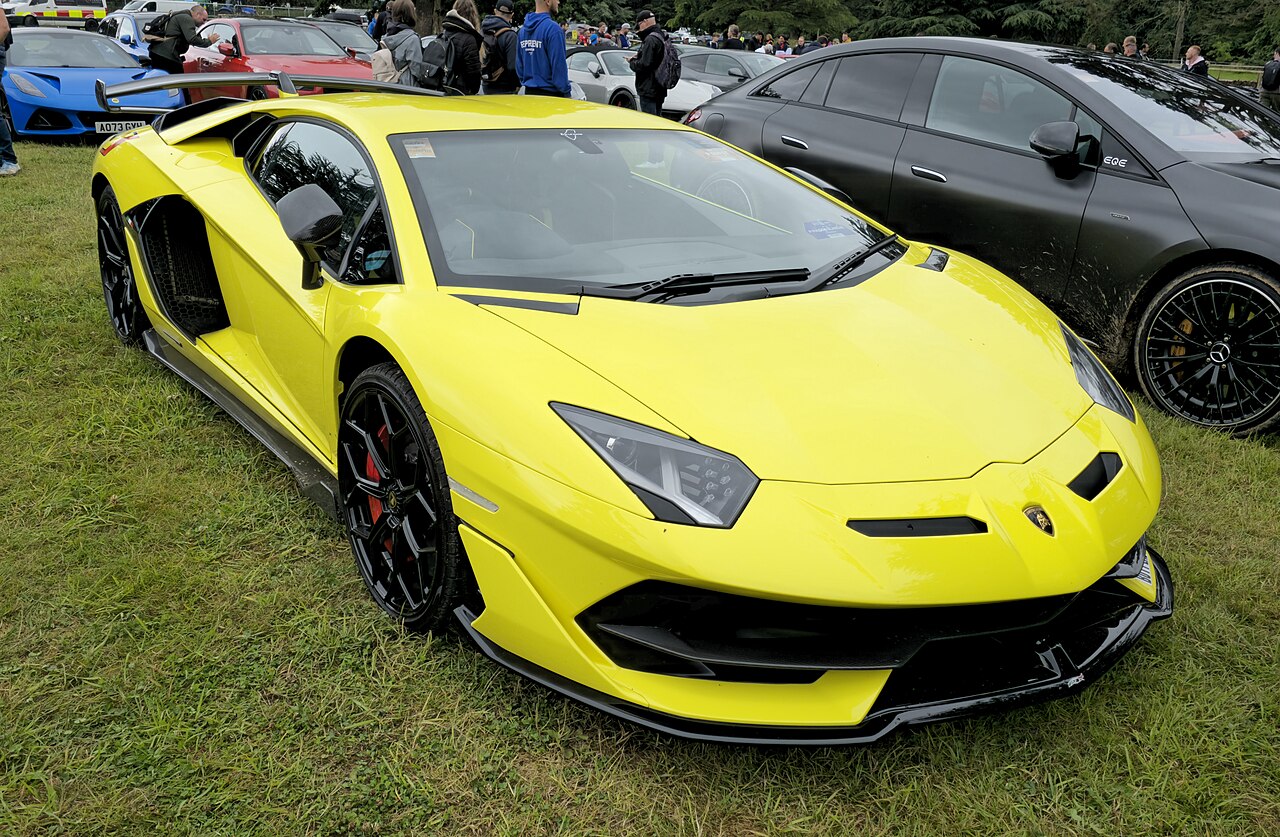
The source-identified yellow SVJ is photographed outdoors from the front quarter. Its deep lower nose, dark splitter and sculpted side opening create a much more layered presentation than an early Aventador body. The windscreen and roof form a compact central volume between the large wheel arches. The image is useful for comparing a real standard SVJ appearance with the contrasting number graphics of the SVJ 63 in the next profile.
Engineering and the concept brief
The manufacturer records a 6,498 cm³ naturally aspirated V12 and ALA 2.0, its active aerodynamic system. An active aero description concerns controlled airflow and load; it should be kept separate from a simple observation that the car has a large wing. Model documents explain the system, while an individual service dossier can establish the condition and configuration of one car’s mechanisms. The photograph documents exterior form rather than an instrumented aerodynamic measurement.
Why this Lamborghini belongs in the design archive
SVJ makes a natural later comparison with the SV coupé in this batch. Both are named V12 performance derivatives, but they occupy different programme stages. For a collection article, the useful comparison concerns the original design brief, the visible body changes and each edition’s own reference scope. Linking SVJ to its Roadster also lets readers explore body differences without treating all Aventadors as one numerically rare family.
Recognising and documenting the physical subject
Source-identified 2019 Aventador SVJ photographed by Calreyn88 in July 2024. Yellow coupé appearance; programme introduction: 2018. The original file record identifies the named subject, and the visible configuration supports the match. The photograph is a record of this appearance rather than a certification of every concealed component. Preserve its creator and individual licence when uploading the image. Further views of the cabin, rear, identification plates and mechanical areas would extend the dossier, provided they are connected to the same model or documented object. A chassis number should enter the individual record only when a clear source establishes it.
Reading the road-car record
A historic model specification and an individual vehicle dossier answer different questions. The model record describes the engine arrangement, body form and equipment offered for a defined series. The individual dossier establishes what one chassis left the factory with and what has happened to it since. Keeping those records connected is particularly useful when cars have been restored, repainted or updated. A published model output remains a period reference; it does not measure the present condition of the photographed engine. Likewise, a period optional feature should not be described as installed on every surviving example without configuration evidence.
For a collector, a useful sequence begins with the chassis identity, continues through the original delivery configuration, and follows the dated history of repairs and changes. That approach gives the attractive exterior photograph a documentary foundation. Engine and gearbox identifiers, build sheets and restoration invoices can add precision where the broad model record ends. The production reference describes a finite original programme; a current survivor register is a separate record that may grow as previously unrecorded cars emerge.
Collector significance and future research
The value of a concept archive lies in preserving the relationship between an idea, the people who developed it and the object that made it visible. A strong collection record keeps the original name, reference year, credited photographs and source links attached to that relationship. If new photographs or factory documents emerge, they can add a show appearance, a construction detail or a later change without replacing the original identity. This is particularly useful for a car whose published pictures may span several exhibitions and whose name may have acquired different spellings.
A finite model family and one of its named variants must not be added together as if they were separate manufacturing programmes. Where this profile uses a parent-family reference, it establishes the low-volume context without assigning that total to the named derivative. Published estimates and conflicting series counts retain their qualifications. A future exact tally should identify the chassis and definitions it covers, including whether prototypes, conversions or later rebuilds are included. Survivor counts require a separate dated register. This keeps the car’s rarity connected to a clear historical scope while allowing better evidence to refine the record.
Reading the evidence for this profile
The original source links below identify the programme and the historical statements used in this article. The photograph has its own creator and licence record, separate from the manufacturer’s vehicle history. Keep both when transferring this profile into a collection catalogue. A manufacturing tally describes how many cars belong to a defined original programme; it does not measure how many survive, how many are publicly visible, or how many retain all their original components. Those individual questions require dated chassis and restoration evidence. The reference year likewise describes the programme’s introduction or named historic configuration, while the supplied caption states the photographed setting and any established individual identity. This lets future research expand the car’s history without blurring the scope of the record already assembled here.
Specifications and verified rarity
| Reference year | 2018 |
|---|---|
| Model / programme | Aventador SVJ |
| Body / role | Limited V12 coupé with ALA 2.0 |
| Engine / architecture | 6,498 cm³ naturally aspirated V12; four-wheel drive; ALA 2.0 programme |
| Reference-year basis | Programme introduction / named historic configuration |
| Individual chassis certification | Not assigned from the photograph |
| Exact manufacturing tally | Not established |
| Rarity evidence | 900 for the documented complete programme |
| Rarity scope | Verified complete named Aventador SVJ edition announced with 900 examples. Completed manufacturing census and present survival are separate; no independently audited exact tally assigned. |
| Inventory reference | LAM-094 — Verified |
Frequently asked questions
When was SVJ introduced?
2018 according to Lamborghini’s model record.
What is the standard edition limit?
900 examples.
Is SVJ 63 the same named edition?
It is the distinct commemorative special edition.
Does a visible wing prove ALA operation?
System operation requires technical and vehicle-specific evidence.
What rarity or archive scope is verified?
Verified complete named Aventador SVJ edition announced with 900 examples. Completed manufacturing census and present survival are separate; no independently audited exact tally assigned.
Who took the supplied photograph?
Calreyn88 via Wikimedia Commons, under CC BY-SA 4.0. The original file and licence links accompany the image. Retain that credit when the photograph is uploaded, exported or reused.
Related Lamborghini profiles
Sources and photo credits
Photograph: Calreyn88 via Wikimedia Commons original file, CC BY-SA 4.0. Source-provided photograph supplied without local cropping, retouching or text removal. A source thumbnail is used where available. Source-identified 2019 Aventador SVJ photographed by Calreyn88 in July 2024. Yellow coupé appearance; programme introduction: 2018.
Built in limited numbers
Verified complete named Aventador SVJ edition announced with 900 examples. Completed manufacturing census and present survival are separate; no independently audited exact tally assigned.
Gallery
Specifications
Factory specifications may vary by model year, market and configuration.
Identity & production
- Official model
- Aventador SVJ