2015 Hyundai Vision G Coupe Concept
Explore the 2015 Hyundai Vision G: V8 concept history, Genesis design heritage, verified archive scope and a credited Frankfurt photograph.
Vision G occupies an unusual place in the Genesis design story: Hyundai unveiled it before Genesis became a standalone luxury brand.
History and purpose
Vision G occupies an unusual place in the Genesis design story: Hyundai unveiled it before Genesis became a standalone luxury brand. Hyundai’s August 2015 announcement establishes the original identity, while Genesis’ own concept archive explains why the coupe belongs in the later brand’s design history. This is therefore a heritage archive profile, with the original Hyundai attribution preserved. Its long, sculptural body explored a premium direction rather than announcing a numbered customer edition. The record leaves its complete fabrication tally unknown. That makes the car’s significance understandable without turning a public show appearance into an invented production total.
Design and engineering
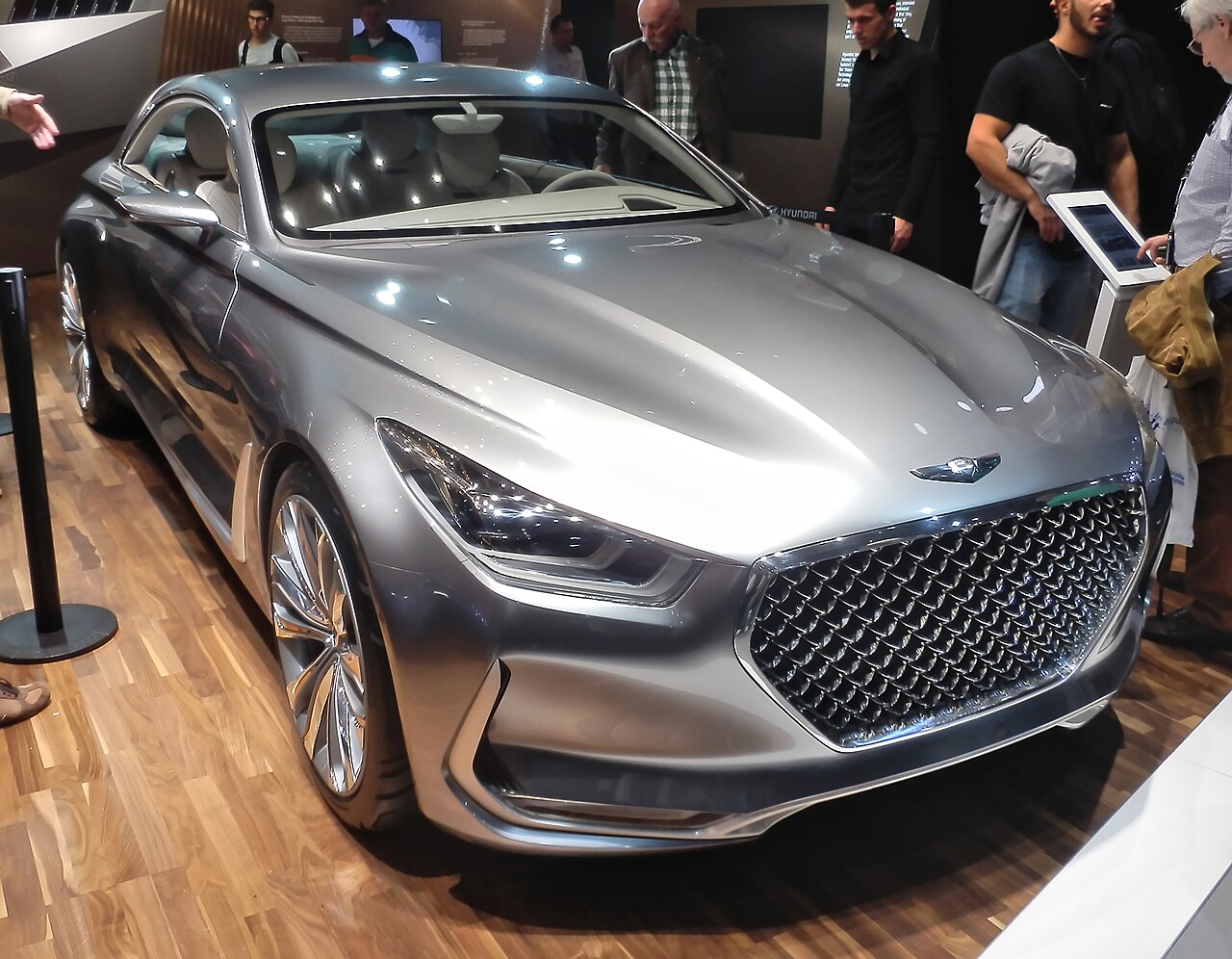
The supplied Frankfurt photograph shows a substantial two-door coupe with a long bonnet, an upright grille and a tightly drawn passenger compartment. Its bright finish makes the shoulder surfaces easy to read. Visually, much of the drama comes from proportion: the cabin appears pulled toward the rear, leaving the front body to establish the car’s presence. This is an editorial reading of the photographed shape. Hyundai’s launch record separately supplies the 5.0-litre Tau V8 description and its 420-horsepower rating. Those announced specifications should remain tied to the concept description rather than being confused with a later production Genesis coupe.
Identifying the original configuration
The original Vision G name and the 2015 date should stay together. Adding the word Genesis helps explain its archive placement, but it must not erase Hyundai’s role at the debut. The picture is a later public display of the concept, rather than evidence that a new car was manufactured for each event. A useful object record would connect transport, exhibitions and any operating demonstrations to dated documentation. Its appearance confirms the recognizable physical coupe; unseen drivetrain details and an individual chassis marking require separate evidence. This approach also distinguishes it from the earlier Hyundai Genesis production coupe.
Collector context and preservation
For an enthusiast catalogue, Vision G is especially useful beside the 2016 New York Concept. Their bodies explore different uses of a premium design vocabulary: an expansive coupe and a more compact sports sedan. A collection can explain that transition through rooflines, grille shapes and the relationship between bonnet and cabin. Preservation priorities would include the concept’s finish, glazing, trim and display mechanisms, each recorded in its own condition report. Keep the historical photographs with their actual dates and creators. The resulting profile can tell a coherent origin story while leaving room for a future custodial account of the specific object.
Reading the evidence for this profile
The original source links below identify the programme and the historical statements used in this article. The photograph has its own creator and licence record, separate from the manufacturer’s vehicle history. Keep both when transferring this profile into a collection catalogue. A manufacturing tally describes how many cars belong to a defined original programme; it does not measure how many survive, how many are publicly visible, or how many retain all their original components. Those individual questions require dated chassis and restoration evidence. The reference year likewise describes the programme’s introduction or named historic configuration, while the supplied caption states the photographed setting and any established individual identity. This lets future research expand the car’s history without blurring the scope of the record already assembled here.
Specifications and verified rarity
| Reference year | 2015 |
|---|---|
| Model / programme | Vision G Coupe Concept |
| Body / role | Two-door luxury design concept |
| Documented engine | 5.0-litre Tau V8; Hyundai announcement rated 420 hp |
| Architecture / transmission | Luxury coupe concept; transmission specification not asserted |
| Exact manufacturing tally | Not established |
| Eligibility bound | Physical concept archive scope; tally unknown |
| Rarity scope | Physical Hyundai Vision G concept in the official Genesis design archive. Debuted before the standalone Genesis brand; full fabrication tally unknown. No retail series or one-car manufacturing total asserted. |
| Inventory reference | GNS-010 — Verified |
Frequently asked questions
What is the Hyundai Vision G Coupe Concept?
A physical Hyundai design concept introduced in 2015 and retained in the official Genesis concept archive; its debut predates the standalone Genesis brand.
What engineering defines Vision G?
5.0-litre Tau V8; Hyundai announcement rated 420 hp. Luxury coupe concept; transmission specification not asserted. These are the documented programme or preserved-concept specifications. Connect an individual vehicle’s installed components to its own dated records before assigning a factory configuration to that particular example.
Why is 2015 the reference year?
It identifies the introduction or original historical configuration described in this article. The photograph can show a later example or a later display of the original subject. The source inventory’s original heading remains an identity alias wherever the date or model name has been corrected.
How should an individual Vision G Coupe Concept be documented?
Start with the chassis identity and connect it to dated construction, registration or custodial records. Keep exterior, interior, engine and underbody photographs together. Record changes to finish, equipment and mechanical specification as separate events, so the physical car’s history can grow without changing the definition of the original programme.
What rarity or archive scope is verified?
Physical Hyundai Vision G concept in the official Genesis design archive. Debuted before the standalone Genesis brand; full fabrication tally unknown. No retail series or one-car manufacturing total asserted.
Who took the supplied photograph?
Alexander Migl via Wikimedia Commons, under CC BY-SA 4.0. The original file and licence links accompany the image. Retain that credit when the photograph is uploaded, exported or reused.
Related Genesis profiles
Sources and photo credits
- Manufacturer, institutional or original custodial record
- Official Genesis Vision G design archive
- Genesis standalone brand launch, November 2015
Photograph: Alexander Migl via Wikimedia Commons original file, CC BY-SA 4.0. Source-provided photograph supplied without local cropping, retouching or text removal. A source thumbnail is used where available. Hyundai Vision G coupe concept at the 2015 Frankfurt motor show; included as a Genesis design heritage archive, with original Hyundai attribution retained.
Built in limited numbers
Physical Hyundai Vision G concept in the official Genesis design archive. Debuted before the standalone Genesis brand; full fabrication tally unknown. No retail series or one-car manufacturing total asserted.
Gallery
Specifications
Factory specifications may vary by model year, market and configuration.
Identity & production
- Official model
- Vision G Coupe Concept