1999 Cadillac Evoq Concept
Explore the 1999 Cadillac Evoq Concept: history, design, scoped rarity, collector details, specifications and an authentic photograph with full credit.
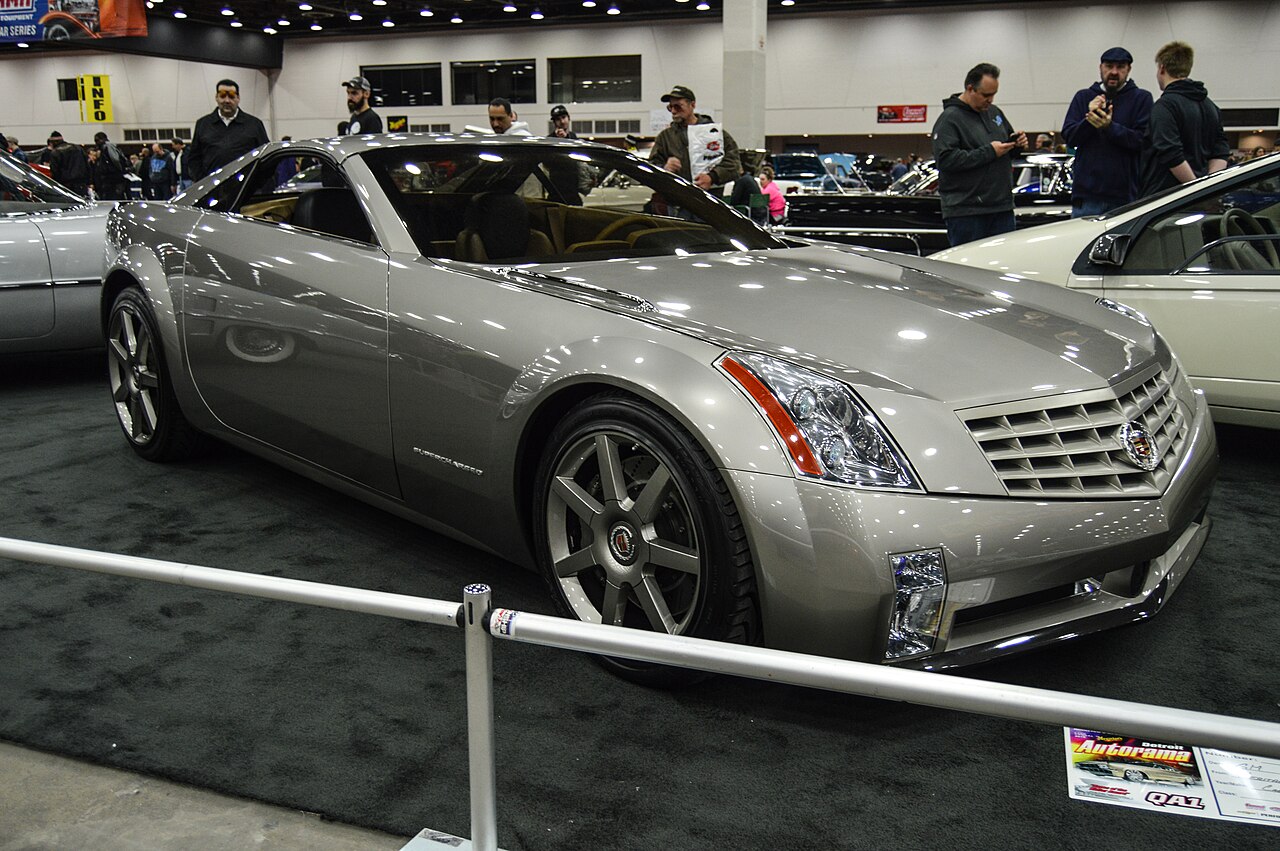
The 1999 Cadillac Evoq concept turns Cadillac luxury into a low, angular two-seat roadster proposal. Its silver surfaces, upright light signatures and compact dark canopy give the physical show car a distinct identity. This archive profile follows the original Evoq project, supported by the contemporary Tokyo Motor Show listing and a later authentic photograph of the concept, without claiming a certified worldwide prototype build total.
History, identity and design
In the selected show photograph, the Evoq’s front is divided into sharply defined surfaces. A central grille gives the nose a familiar Cadillac reference, while tall lamps and angular corners frame it. The bonnet is low and relatively flat, and the dark canopy sits close behind it. Large wheels and emphatic side openings give the compact body a purposeful stance. As visual interpretation, the design makes light, edge and proportion do much of the expressive work that older Cadillacs assigned to fins, broad chrome surfaces and long passenger bodies.
The contemporary motor-show archive names Evoq and describes a two-seat luxury roadster under Cadillac’s Art and Science theme. Its listed engine is a supercharged Northstar V-8 concept proposal. That reference establishes the original project’s public identity and technical presentation. It does not turn a show-car specification into a customer production certification. The article therefore avoids borrowing road-car performance figures from the later XLR or assigning a production-series total to a physical concept whose complete development and display population has not been audited.
The chosen image was made years after the original show programme, and its source identifies the 1999 Evoq directly. That is valuable exhibition evidence, but the capture date is not the vehicle’s introduction year. The two belong in separate fields. The physical car’s visible form can be studied honestly in the later setting, while the contemporary listing provides its original programme context. The photograph retains background cars, barriers and natural exhibition signage, preserving the actual display rather than pretending to reconstruct a spotless 1999 debut scene.
For a curator, Evoq offers a useful comparison with the Cien. Both can be studied as physical design projects, but their proportions and proposals differ. Evoq concentrates on the luxury roadster, while Cien’s mid-engine supercar form develops another kind of Cadillac identity. No shared production platform is inferred from that comparison. A project archive should retain original naming, show documentation, proposal specifications and dated images together. The concept’s significance lies in the design record it preserves, even where prototype manufacturing totals and subsequent component changes remain unconfirmed.
Specifications and production scope
| Reference year | 1999 |
|---|---|
| Subject | Evoq Concept |
| Engineering context | Supercharged Northstar V-8 concept proposal |
| Design focus | Art and Science as a luxury roadster |
| Rarity scope | Original identified physical concept project represented by its documented show car. One archive project record; exact worldwide prototype manufacturing total is not established and is left unset. |
| Exact scoped build tally | Unset; see scoped eligibility note |
| Inventory reference | CAD-122 — Verified |
Keeping the collector record useful
A useful Evoq file separates the model story from the life of an individual vehicle. Record the body or edition designation exactly as it appears in matching documents, then keep clear front, side, rear and cabin photographs with the dates attached. Changes made during restoration deserve their own entries, including the reason for the work and the evidence used. That approach lets future readers compare the physical car with this profile without confusing a present appearance, an original factory specification and an attractive historical association.
Documentary photograph
1999 Cadillac Evoq Concept. Documentary model photograph; individual car provenance is certified only where separately stated in the article. The source image was checked for the pictured body or physical project and its file-specific reuse terms. The visible photograph caption links the photographer, original file and licence so the illustration can be traced independently of the article.
Frequently asked questions
What contemporary source identifies Evoq?
The 1999 Tokyo Motor Show archive names the GM Evoq and describes its Cadillac Art and Science luxury-roadster proposal. That contemporary project listing anchors the identity used in this profile.
Is one the verified global prototype total?
No. The archive scope is one identified original physical project record. The exact worldwide number of development, display and working prototypes remains unset rather than being treated as a certified manufacturing total.
What production scope applies to the 1999 Evoq Concept?
Original identified physical concept project represented by its documented show car. One archive project record; exact worldwide prototype manufacturing total is not established and is left unset.
What should a collector document on an individual example?
Keep the vehicle’s identification, body or edition evidence, dated photographs and restoration records together. This Evoq profile explains the model subject; ownership, original finish and present condition require records that match the individual car being considered.
Does this profile provide a complete original specification?
The specification table records the supported identity and engineering context for this year. An exterior photograph cannot establish every optional feature or later component change. Preserve any matching build record before adding more precise equipment claims to the Evoq Concept file.
Who took the photograph and how may it be reused?
The bundled image is credited to Yahya S., under CC BY 2.0 on its individual Commons file page. Keep the visible named credit and licence link. The supplied source version has no local image edits; background signage and photographer marks remain where present.
Sources
Related Cadillac profiles
Compare the body forms and clearly scoped identities in 1987 Cadillac Allanté and 2002 Cadillac Cien Concept. Each profile keeps its own year, photograph and rarity scope.
Built in limited numbers
Original identified physical concept project represented by its documented show car. One archive project record; exact worldwide prototype manufacturing total is not established and is left unset.
Gallery
Specifications
Factory specifications may vary by model year, market and configuration.
Identity & production
- Official model
- Evoq Concept