1996 Kia Elan
Kia Elan: verified 1996 launch, the marque continuation story, conflicting published rarity totals and a credited rear-quarter photograph.
The Kia Elan is a distinctive chapter in the history of the open two-seat sports car. Kia’s 1996 launch gives the Lotus-derived roadster a separate marque identity, while conflicting published totals require a careful rarity record.
Origins and the correct historical identity
Kia’s own chronology places the Elan launch in July 1996. Specialist histories identify the continuation of the Lotus M100 design and report a small complete Kia programme: Hagerty discusses 792 alongside an alternative 1,056 figure, while Autocar reports 1,056. Both accounts place the programme below 7,500, but they do not resolve one exact manufacturing tally. The 1995 workbook heading is retained as an alias rather than used as the retail launch year.
Design: what makes Elan distinctive
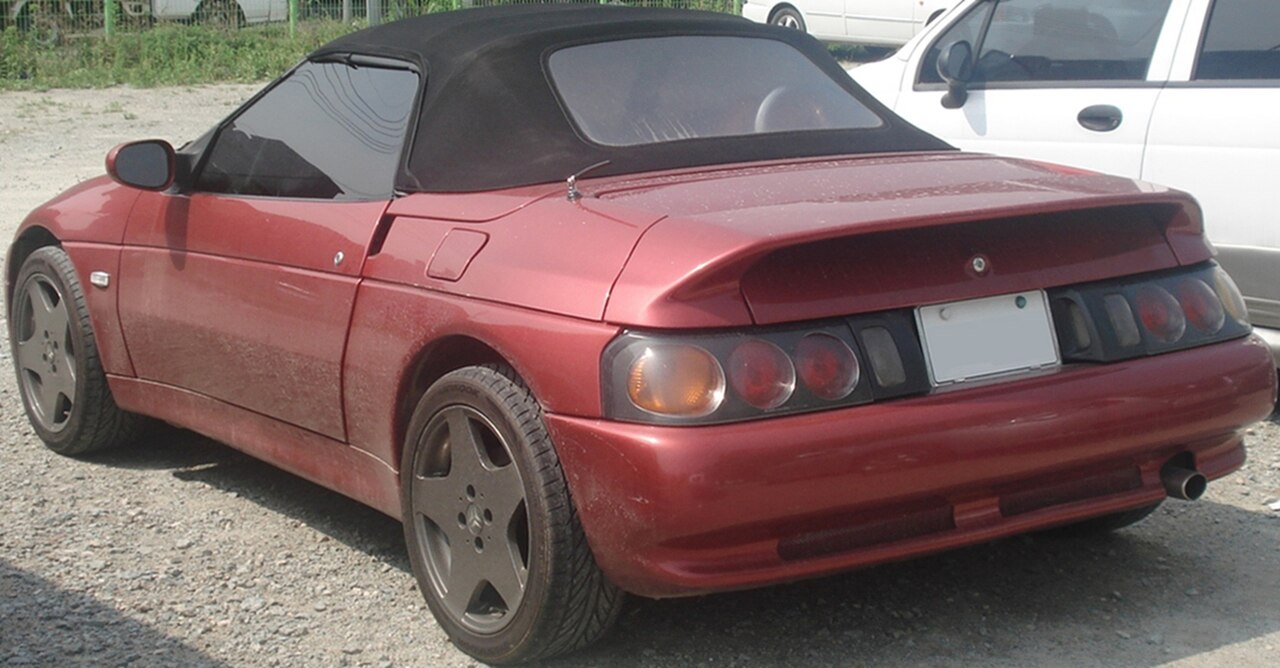
The photograph shows a red roadster with a fabric roof, a compact cabin and circular rear lamps. The rear-quarter angle is useful because the lamps help distinguish the Kia continuation from the earlier Lotus configuration. The shape has an intimate, low-slung character, with relatively little body devoted to anything beyond occupants and their immediate surroundings. That visual focus explains the appeal of the car as a physical object without relying on a contemporary performance comparison.
Engineering and the concept brief
A continuation programme needs its own technical record even when the underlying design is inherited. Component substitutions, market requirements and changes made during production can affect the actual car. A collector should connect service information to the Kia identity and the individual chassis rather than assume every Lotus document applies unchanged. This profile leaves precise power ratings unfilled because the selected original Kia chronology establishes the launch more clearly than a component-level specification.
Why this Hyundai belongs in the design archive
The Elan is useful in a collection because it links two distinct manufacturers through a real production vehicle. Its Kia badges and configuration belong to that later chapter, so the car should not disappear into a generic Lotus entry. At the same time, the inherited design history deserves clear attribution. The interesting record is the relationship between those chapters and the physical details that make a surviving Kia example recognisable.
Recognising and documenting the physical subject
Chu’s photograph supplies a clear rear-quarter view of a Kia Elan. The source filename and category identify the Kia, and the visible round lamp configuration supports that match; the source’s short description loosely says Lotus Elan. The caption here records the more precise subject without assigning an unseen chassis number or exact model year. A fuller individual dossier would add identification documents, engine-bay photographs and dated ownership history.
Documenting a Kia Elan as an individual roadster
A surviving roadster has a history separate from the programme totals. Record its chassis identity, factory marque identification, original registration and dated photographs together. Then trace replacement parts, paintwork, trim and any conversion work through invoices or specialist records. A visually familiar body does not establish the provenance of every component. For an inherited design such as this, the distinction between a part that fits and a part originally supplied is particularly useful when assembling a dependable individual vehicle dossier.
The reported manufacturing figures remain documentary references rather than a resolved factory census. A final chassis sequence, a sales total and a completed-car count can describe different populations. Future factory evidence should specify which one it measures and whether overseas naming or exports are included. Until that reconciliation is available, the profile preserves the conflicting published figures and keeps the exact production field empty. Its collector interest can still be discussed through the verified Kia identity, the physical roadster and the documented small-programme historical accounts.
Preserving the marque continuation story
The strongest presentation connects the car’s body history with its later manufacturer identity. A visitor should be able to understand why the shape recalls another marque and why the Kia still merits its own record. Clear photographs of the lamps, emblems and cabin make that relationship tangible. Ownership and maintenance evidence then add the story of the particular surviving vehicle. Keeping those forms of documentation together makes future research easier and avoids losing a small production programme inside a broader model history.
Reading the evidence for this profile
The original source links below identify the programme and the historical statements used in this article. The photograph has its own creator and licence record, separate from the manufacturer’s vehicle history. Keep both when transferring this profile into a collection catalogue. A manufacturing tally describes how many cars belong to a defined original programme; it does not measure how many survive, how many are publicly visible, or how many retain all their original components. Those individual questions require dated chassis and restoration evidence. The reference year likewise describes the programme’s introduction or named historic configuration, while the supplied caption states the photographed setting and any established individual identity. This lets future research expand the car’s history without blurring the scope of the record already assembled here.
Specifications and verified rarity
| Reference year | 1996 |
|---|---|
| Model / programme | Elan |
| Body / role | Low-volume production roadster |
| Kia launch | July 1996 |
| Programme identity | Kia continuation of the Lotus M100 roadster |
| Published rarity references | 792 / 1,056; unresolved tally |
| Exact power rating | Not assigned from conflicting secondary specifications |
| Exact manufacturing tally | Not established |
| Rarity evidence | 1056 reported whole-programme reference; exact tally unresolved, no hard ceiling asserted |
| Rarity scope | Verified Kia Elan identity and 1996 factory launch. Specialist complete-programme histories report 792 or 1,056, both below 7,500; their conflicting tally is not treated as an exact verified count or a factory-announced ceiling. Lotus production totals are separate. |
| Inventory reference | KIA-015 — Verified |
Frequently asked questions
When does Kia date the production launch?
July 1996 in its own chronology.
Is the exact completed total verified?
Published histories disagree between 792 and 1,056; the exact tally remains unresolved.
Is this the earlier Lotus-branded car?
The profile records the Kia continuation as its own marque programme.
What identifies the supplied image?
The Kia filename/category and visible round rear-lamp configuration.
What rarity or archive scope is verified?
Verified Kia Elan identity and 1996 factory launch. Specialist complete-programme histories report 792 or 1,056, both below 7,500; their conflicting tally is not treated as an exact verified count or a factory-announced ceiling. Lotus production totals are separate.
Who took the supplied photograph?
Chu via Wikimedia Commons, under CC BY-SA 3.0. The original file and licence links accompany the image. Retain that credit when the photograph is uploaded, exported or reused.
Related Kia profiles
Sources and photo credits
- Kia original historical chronology
- Hagerty specialist Kia Elan history
- Autocar complete-programme rarity account
Photograph: Chu via Wikimedia Commons original file, CC BY-SA 3.0. Source-provided photograph supplied without local cropping, retouching or text removal. A source thumbnail is used where available. Red Kia Elan photographed by Chu; the rear-quarter view shows the Kia continuation’s round rear-lamp configuration.
Built in limited numbers
Verified Kia Elan identity and 1996 factory launch. Specialist complete-programme histories report 792 or 1,056, both below 7,500; their conflicting tally is not treated as an exact verified count or a factory-announced ceiling. Lotus production totals are separate.
Gallery
Specifications
Factory specifications may vary by model year, market and configuration.
Identity & production
- Official model
- Elan