1991 Toyota Celica GT-Four RC / Carlos Sainz
Explore the Toyota Celica GT-Four RC / Carlos Sainz: history, verified identity, specification references, rarity evidence and real credited photos.
The 1991 Celica GT-Four RC and Carlos Sainz naming belongs to a worldwide 5,000-car homologation family. Toyota’s contemporary release gives that global boundary and identifies 1,800 cars for Japan within it, avoiding the common mistake of adding regional names as separate production programmes.
The factory announcement defines the whole programme
Toyota’s 27 September 1991 release identifies the GT-Four RC and the 5,000-car worldwide homologation reference. It states that 1,800 were for Japan. The source inventory’s 3,000 global shorthand is therefore replaced with the factory boundary. Regional Carlos Sainz naming is retained in the public identity, while original rows and market references remain traceable. The result is one programme-level profile rather than several overlapping totals for related market editions.
Toyota: contemporary GT-Four RC global and Japan programme references
Competition requirements shape the changes
The contemporary announcement describes changes including a water-cooled intercooler arrangement, a metal turbine in place of the referenced ceramic design, and distinctive cooling provisions. Those are specific to the manufacturer’s homologation account. They should not be flattened into a claim that every ST185 had identical equipment. Market specifications also matter: a Japanese RC output reference cannot automatically be assigned to a European Carlos Sainz car simply because both belong to the same worldwide programme.
Body details are clues rather than proof
The revised bonnet and front cooling treatment help readers recognise the intended variant. External components can nevertheless be replaced, copied or transferred to ordinary GT-Four cars. An authentication file should therefore connect appearance to factory identity information, original market documentation and delivery records. This article supplies model-level context, not a chassis inspection. Correct-looking panels are useful evidence only when they agree with the broader documentary history.
Toyota: contemporary GT-Four RC global and Japan programme references
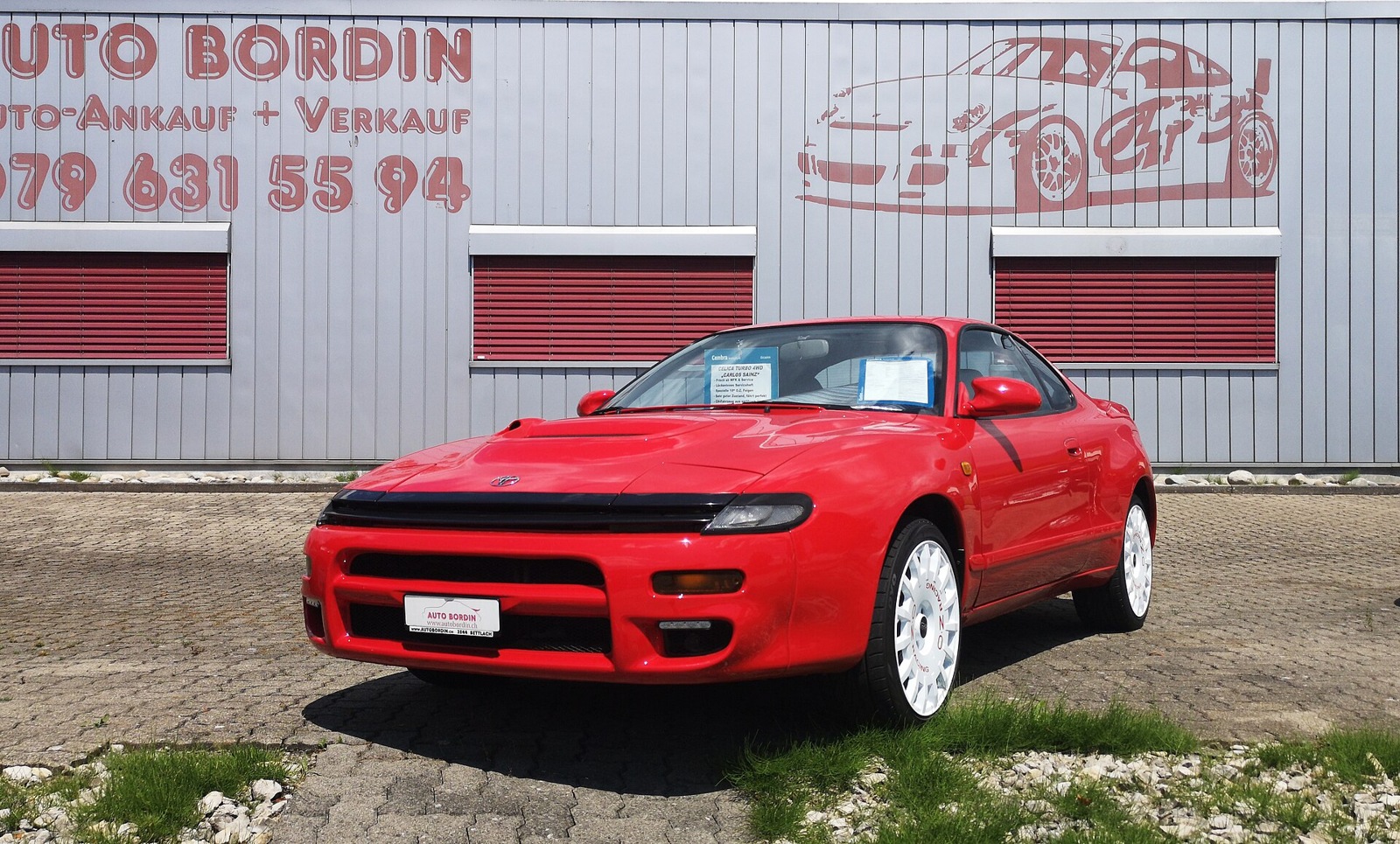
The photograph shows a later individual example
The credited Commons photograph identifies a red Carlos Sainz example with white wheels in a later setting. It is a matched model image, but it is not presented as a factory-original configuration in every detail. Wheel choice and other visible changes belong to the illustrated car. The distinction lets readers see the homologation body without turning the photograph into a guarantee of original specification or the provenance of another car offered for sale.
Toyota: contemporary GT-Four RC global and Japan programme references
Regional subsets stay inside the global boundary
A Japan allocation, a UK delivery figure and a European designation can each be useful research references. They cannot be added to the 5,000-car family as new manufacture. The original non-Verified regional inventory rows remain held rather than promoted into extra profiles by association. This programme-level identity gives the archive a clear boundary while leaving individual market specifications available for later, properly supported documentary work.
Specifications and identity reference
| Reference year | 1991 |
|---|---|
| Family | ST185 GT-Four homologation programme |
| Global manufacturer reference | 5,000 cars |
| Japan reference within global programme | 1,800 |
| Market names | GT-Four RC / Carlos Sainz |
| Technical themes | Charge cooling, turbocharger and cooling-body revisions |
| Image qualification | Later Carlos Sainz example; visible modifications retained |
Rarity and production scope
The attributed reference is 5,000 worldwide for the ST185 homologation family. Japan’s 1,800 are included within it, not additional cars. Regional RC/Carlos Sainz allocations are not separately added, and the inventory’s 3,000-global shorthand is corrected. Non-Verified regional rows are not promoted by this entry. Exact completed-production fields remain blank pending an audited chassis register.
What the photograph represents
A red Celica identified by contributor crash71100 as a GT-Four Carlos Sainz. White wheels and the later photographed setting are retained; the image is not claimed to show untouched factory specification in every detail. It illustrates the homologation-family identity without authenticating a different vehicle.
Related Toyota profiles
Frequently asked questions
Are RC and Carlos Sainz totals added together?
No. Regional names and allocations sit within the worldwide 5,000-car homologation boundary.
Can a Japanese RC power figure describe every European car?
No. Market specifications require their own documentation; the shared programme does not erase those differences.
What is the production-count boundary for this profile?
The attributed reference is 5,000 worldwide for the ST185 homologation family. Japan’s 1,800 are included within it, not additional cars. Regional RC/Carlos Sainz allocations are not separately added, and the inventory’s 3,000-global shorthand is corrected. Non-Verified regional rows are not promoted by this entry. Exact completed-production fields remain blank pending an audited chassis register.
Sources and further reading
Research checked 19 October 2026. Linked manufacturer heritage pages, factory announcements, official distributor publications and labelled contemporary coverage support the specifically identified claims. Photographic descriptions identify the illustrated subject. Design analysis and suggested authentication steps are editorial interpretation.
Built in limited numbers
The attributed reference is 5,000 worldwide for the ST185 homologation family. Japan’s 1,800 are included within it, not additional cars. Regional RC/Carlos Sainz allocations are not separately added, and the inventory’s 3,000-global shorthand is corrected. Non-Verified regional rows are not promoted by this entry. Exact completed-production fields remain blank pending an audited chassis register.
Gallery
Specifications
Factory specifications may vary by model year, market and configuration.
Identity & production
- Official model
- Toyota Celica GT-Four RC / Carlos Sainz
Sources and verification
Source citations are being prepared for this profile.