1986 Chevrolet Corvette Indy Concept
1986 Chevrolet Corvette Indy Concept: verified history, production scope, design, specifications and collector details, with an authentic photo and full credit.
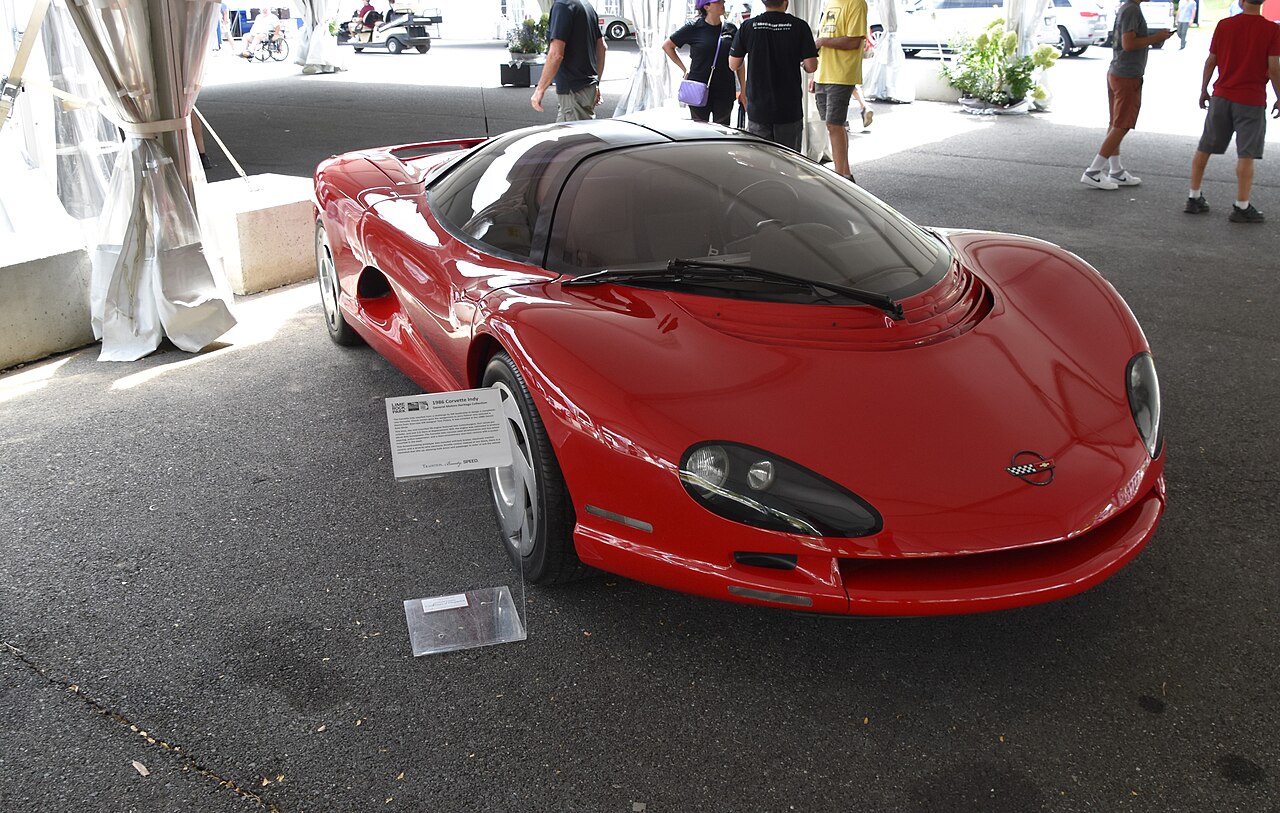
The 1986 Chevrolet Corvette Indy Concept takes the Corvette name into a striking experimental form. Its red body and enclosed canopy define a physical archive subject that must be kept separate from the production 1986 Indianapolis-associated convertible.
History and model identity
The National Corvette Museum’s own exhibition announcements identify the Corvette Indy concept as a displayed physical vehicle. That evidence supports a genuine archive project rather than a rendering-only proposal. The eligibility scope is one project record; the article does not adopt a one-of-one manufacturing assertion from incidental photo commentary.
The project’s mid-engine experimental context differs fundamentally from the production convertible programme. The two can appear in the same chronological collection, but they answer different questions. One concerns an experimental design and packaging direction; the other concerns an annual population of manufactured roadgoing open cars.
Design, photographs and collector context
The supplied 2022 image by Charles shows a red Indy concept at a public display. The glazing forms a dark enclosure set into a smooth, low body. The front surfaces are arranged around compact openings rather than the tall grille format seen on the early Chevrolet touring cars. The colour contrast between red body and dark canopy makes that composition immediately legible.
For a design-focused collection, the best next comparison is the later CERV III. Keep the two physical subjects distinct and compare how their cabins, front shapes and surrounding body surfaces are organised. That approach gives readers something concrete to see without assigning an unverified performance result to either preserved concept.
Reading the design in context
The red concept photograph can be explored as a relationship between body and glazing. The dark enclosure is visually concentrated over the cabin, while the surrounding red surfaces flow outward into a low nose and rear body. That contrast makes the passenger space easy to locate even without a cutaway. It is a valuable point to explain in a public-facing archive because experimental packaging can otherwise become a list of unfamiliar terms. A whole-car view establishes the shape first. Additional side and rear images could then show how that enclosure sits within the complete body, provided they document the same identified concept. Keep technical proposals in dated source notes and avoid reading a tested output from the image. The physical project and the engineering proposal can be discussed together without becoming the same kind of evidence. This approach leaves the concept accessible to a design reader while preserving the more specialised development history for someone who wants to follow the sources.
Specifications and rarity
| Reference year / history | 1986 |
|---|---|
| Model / project | Corvette Indy Concept |
| Engineering context | Experimental mid-engine Corvette concept architecture |
| Design and collector theme | A physical research concept with a red enclosed body |
| Production / archive scope | One documented original physical concept project. Exact worldwide prototype manufacturing total is not established and is left unset. |
| Exact scoped manufacturing tally | Unset; see scope description |
| Inventory reference | CHV-170 — Verified |
Building the individual collector record
Keep institutionally documented display identity, project naming and dated configuration records together. Preserve any technical proposal as a dated manufacturer claim rather than a tested present-car result. Label each photo explicitly so a blue CERV III or a production convertible cannot be substituted for the red Indy concept.
Documentary photograph
1986 Corvette Indy concept in a later public display at Lime Rock Park in 2022; documentary photograph by Charles.
Frequently asked questions
Is this the 1986 production Corvette convertible?
No. Corvette Indy identifies a separate physical experimental concept. The production convertible has its own body-year count and profile.
Does this page claim only one Indy object was manufactured worldwide?
No. One refers to the archive project identity. The worldwide total of physical development objects is not established here.
How is the physical subject verified?
The National Corvette Museum’s own exhibition announcements identify the displayed concept, and the supplied photo documents the matching red enclosed-body subject.
What companion profile helps explain the design?
The CERV III page provides a later experimental comparison. Their shapes and engineering histories should be compared while retaining separate names and physical identities.
What production or archive scope applies to this Corvette Indy Concept?
One documented original physical concept project. Exact worldwide prototype manufacturing total is not established and is left unset.
Who took the photograph, and what credit must remain?
The supplied photograph is credited to Charles from Port Chester, New York via Wikimedia Commons under CC BY 2.0. Its original file page and individual licence are linked in the photo credit. Keep the photographer name, source and licence visible when using the image; this version has no local retouching or cropping.
Sources and photo provenance
- Museum collection / original institutional account
- Museum collection / original institutional account
- Photo: Charles from Port Chester, New York — Chevrolet Corvette Indy Concept Car (1986) (52338833471).jpg
Related Chevrolet profiles
Continue the chronology with 1986 Chevrolet Corvette Convertible — Indianapolis Pace Car Programme and 1988 Chevrolet Corvette 35th Anniversary Edition. Compare each page’s named production or project scope alongside its own documentary photograph.
Built in limited numbers
One documented original physical concept project. Exact worldwide prototype manufacturing total is not established and is left unset.
Gallery
Specifications
Factory specifications may vary by model year, market and configuration.
Identity & production
- Official model
- Corvette Indy Concept