1983 Chevrolet Corvette C4 — Surviving Pilot Car
1983 Chevrolet Corvette C4 — Surviving Pilot Car: verified history, production scope, design, specifications and collector details, with an authentic photo.
The 1983 Chevrolet Corvette C4 surviving pilot car is an individual archive subject, not a one-car manufacturing programme. Its value comes from preserving a physical step in Corvette development that would otherwise be much harder to see.
History and model identity
The National Corvette Museum’s official account records 43 manufactured pilot cars, with 42 destroyed and the surviving car identified as number 23. The count of one used for this archive identity therefore means one documented survivor. It must not be relabelled as one Corvette manufactured in 1983.
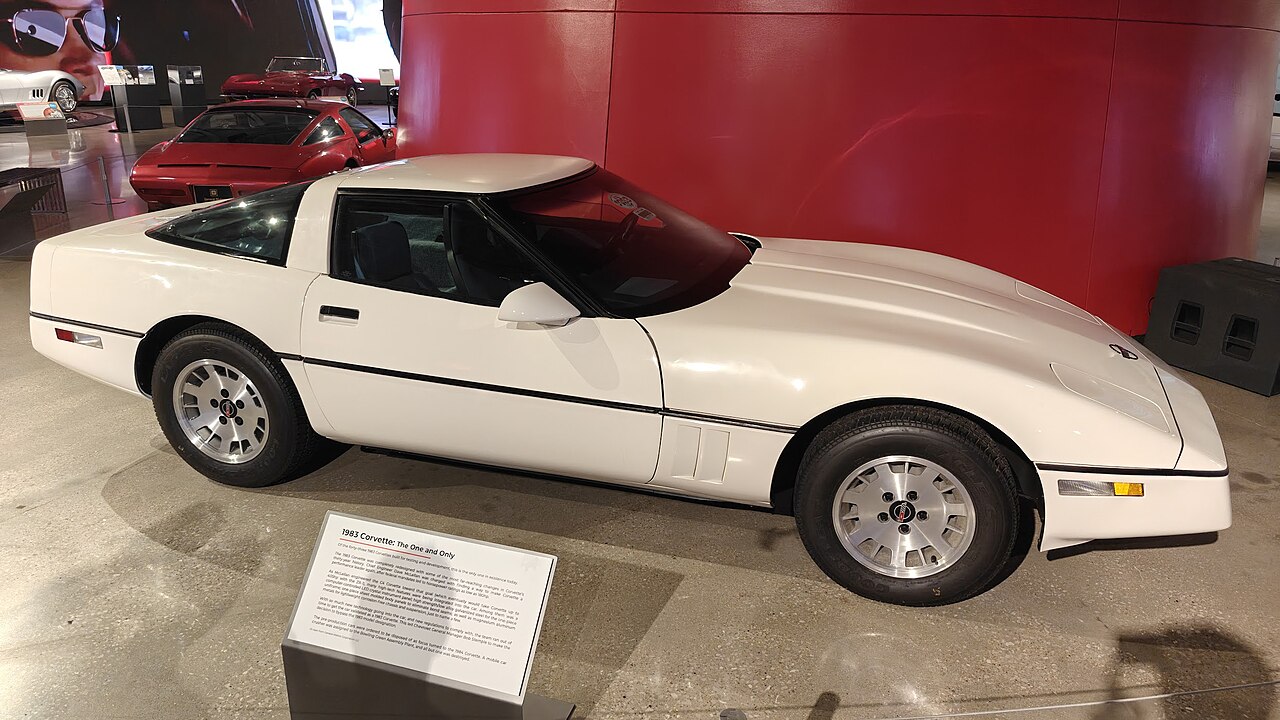
The supplied photograph shows the white surviving pilot car in the National Corvette Museum. Its low angular front, enclosed cabin and large rear glass arrangement make the C4 body direction visible. The image is a later museum view of the preserved subject, not a period assembly photograph or a generic later C4 standing in for the survivor.
Design, photographs and collector context
This profile needs more careful wording than a normal edition page. A production tally describes manufacture; a survivor tally describes what remains from a population. The two figures answer different questions. Preserving both in the article gives readers a richer history and prevents a dramatic headline from making the original programme sound smaller than it was.
In a chronological collection, place the pilot car between the last C3 edition and later production C4 subjects. It provides a physical bridge in the display, while its own individual identity remains separate from the annual road-car totals that follow. The museum setting also explains why preservation and development history are more appropriate themes here than retail availability or owner equipment combinations.
Reading the design in context
A museum survivor asks the reader to think about time in several stages. The pilot programme is one stage; the recorded destruction of other cars is another; the continued care and exhibition of this car is a third. The supplied photograph belongs to that final documentary stage. It cannot stand in for an assembly photograph, but it offers something equally useful: a physical object around which the development story can be explained. In an expanded archive, organise photographs and records by those stages so a visitor can follow what was built, what was lost and what remains available to see. A simple survivor headline then becomes a supported history rather than a dramatic but ambiguous claim. The white body’s C4 form supplies a visible link to later production pages, while the pilot identity keeps this subject separate from them. Its rarity is best understood through that combination of programme context and individual preservation, with each number labelled according to the question it answers.
Specifications and rarity
| Reference year / history | 1983 |
|---|---|
| Model / project | Corvette C4 — Surviving Pilot Car |
| Engineering context | C4 development/pilot-build Corvette |
| Design and collector theme | The museum survivor of the 1983 pilot programme |
| Production / archive scope | One documented surviving original pilot car, number 23. Museum account: 43 pilot cars manufactured, 42 destroyed. Eligibility is the individual surviving archive identity, not a one-car manufacturing claim. |
| Exact scoped manufacturing tally | Unset; see scope description |
| Inventory reference | CHV-166 — Verified |
Building the individual collector record
Keep the pilot-car identity, museum conservation account and dated display photographs together. Record the source for the number 23 designation. Use separate catalogue fields for original pilot manufacture, recorded destruction and the surviving individual so the figures cannot be confused in later exports.
Documentary photograph
The surviving 1983 C4 pilot car at the National Corvette Museum; one documented survivor from the museum’s stated 43-car pilot programme.
Frequently asked questions
Was only one 1983 Corvette manufactured?
No. The museum account records 43 pilot cars. This profile concerns the documented survivor after 42 were destroyed.
Which pilot car survived?
The official museum account identifies number 23. The supplied photo documents the preserved white car in the National Corvette Museum.
Is this an ordinary annual retail production edition?
The subject is a pilot/development archive identity. Its one-survivor scope should not be used as a retail production count.
Why keep manufacture and survival in separate fields?
A manufactured population and the number later surviving describe different stages of history. Keeping them separate prevents the archive’s rarest physical survivor from receiving a false original production total.
What production or archive scope applies to this Corvette C4 — Surviving Pilot Car?
One documented surviving original pilot car, number 23. Museum account: 43 pilot cars manufactured, 42 destroyed. Eligibility is the individual surviving archive identity, not a one-car manufacturing claim.
Who took the photograph, and what credit must remain?
The supplied photograph is credited to Asxm000 via Wikimedia Commons under CC BY-SA 4.0. Its original file page and individual licence are linked in the photo credit. Keep the photographer name, source and licence visible when using the image; this version has no local retouching or cropping.
Sources and photo provenance
- Museum collection / original institutional account
- Photo: Asxm000 — 1983 Chevrolet Corvette C4 Prototype.jpg
Related Chevrolet profiles
Continue the chronology with 1982 Chevrolet Corvette Collector Edition and 1986 Chevrolet Corvette Convertible — Indianapolis Pace Car Programme. Compare each page’s named production or project scope alongside its own documentary photograph.
Built in limited numbers
One documented surviving original pilot car, number 23. Museum account: 43 pilot cars manufactured, 42 destroyed. Eligibility is the individual surviving archive identity, not a one-car manufacturing claim.
Gallery
Specifications
Factory specifications may vary by model year, market and configuration.
Identity & production
- Official model
- Corvette C4 — Surviving Pilot Car