1973 Chevrolet Corvette Four-Rotor / Aerovette
1973 Chevrolet Corvette Four-Rotor / Aerovette: verified history, production scope, design, specifications and collector details, with an authentic photo.
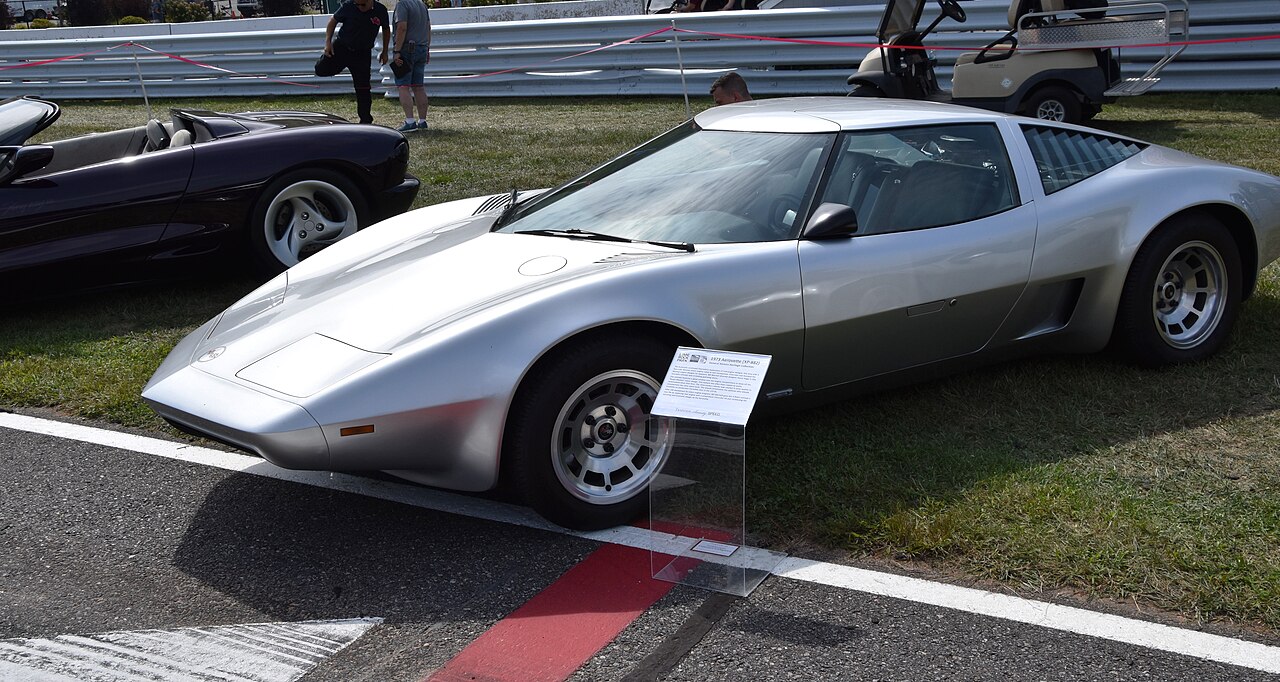
The 1973 Chevrolet Corvette Four-Rotor project and its later Aerovette form tell one connected development story. The preserved silver car illustrates a physical concept whose engine identity changed, making configuration dates essential to a useful profile.
History and model identity
GM’s collection record describes the mid-engine four-rotor experimental car and explains that the rotary engine was later replaced with a Chevrolet small-block V8 after GM abandoned rotary development. It was renamed Aerovette. The inventory’s later V8 Aerovette row is therefore consolidated with this project rather than imported as an additional independent concept.
The manufacturer description gives the body its own clear identity through features including bifold gullwing access and a rear engine-viewing area. These are part of the concept’s packaging story, not ordinary production Corvette equipment. The eligibility scope represents one documented physical archive project; it does not certify the worldwide number of related development objects.
Design, photographs and collector context
The 2022 photograph shows the later preserved Aerovette form, not proof that the four-rotor engine is still fitted. Its silver surface, low wedge-like nose and concentrated cabin make the layout legible from the outside. The image is especially useful when paired with a timeline explaining the original rotary phase and subsequent V8 phase.
Engine change and body continuity are the two ideas to keep in view. A name such as Four-Rotor describes a historical configuration, while Aerovette describes a later chapter of the same documented subject. Joining those chapters gives a reader a complete path through the archive and prevents the striking silver show car from being counted twice.
Reading the design in context
The silver Aerovette photograph is most useful when its body and engineering history are allowed to do different jobs. The image gives a clear view of the low front form and passenger enclosure. The manufacturer account explains the original rotary phase and later V8 conversion. A reader can therefore see continuity in the physical subject while understanding change in its mechanical history. For an expanded gallery, views of the access arrangement and rear packaging would add useful context, provided their configuration dates are identified. Avoid presenting an engine photograph from one phase beside an exterior photograph from another as though both were captured together. The archive can include both, but the captions should preserve their relationship. This makes the concept a practical example of research history rather than a confusing pair of names. A single project record with dated specifications gives the body, engines and later appearances a place to belong without forcing the reader to decide whether several profiles describe several cars or one evolving subject.
Specifications and rarity
| Reference year / history | 1973 |
|---|---|
| Model / project | Corvette Four-Rotor / Aerovette |
| Engineering context | Four-rotor experimental origin; later Chevrolet small-block V8 |
| Design and collector theme | A concept project transformed after the rotary programme |
| Production / archive scope | One documented original physical concept project. Exact worldwide prototype manufacturing total is not established and is left unset. |
| Exact scoped manufacturing tally | Unset; see scope description |
| Inventory reference | CHV-136 — Verified |
Building the individual collector record
Keep rotary and V8 specifications in dated entries. Preserve photographs of cabin access and rear engine packaging, with notes identifying which phase they document. Earlier XP-882 programme material should retain its own development-object scope rather than being treated as automatic proof of an additional Aerovette.
Documentary photograph
The preserved Aerovette project in its later V8 phase, photographed at Lime Rock Park in 2022; the 1973 rotary origin is a separate configuration stage.
Frequently asked questions
Is the photographed Aerovette still a four-rotor car?
The manufacturer history records conversion to a Chevrolet small-block V8. The bundled image is captioned as a later preserved configuration, not evidence of a rotary engine still installed.
Why is the later V8 inventory row an alias?
It represents the later engine phase in the documented project history. Consolidation prevents the same physical concept from being uploaded once for each engine name.
Was this a production Corvette specification?
No. The entry concerns an experimental mid-engine concept with distinctive body-access and packaging features. It does not assign those features to ordinary 1973 road cars.
How should a collector describe the timeline?
Start with the 1973 Four-Rotor phase, then identify the later V8 conversion and Aerovette name. Keep the year of each specification distinct from the date of any modern display photograph.
What production or archive scope applies to this Corvette Four-Rotor / Aerovette?
One documented original physical concept project. Exact worldwide prototype manufacturing total is not established and is left unset.
Who took the photograph, and what credit must remain?
The supplied photograph is credited to Charles from Port Chester, New York via Wikimedia Commons under CC BY 2.0. Its original file page and individual licence are linked in the photo credit. Keep the photographer name, source and licence visible when using the image; this version has no local retouching or cropping.
Sources and photo provenance
- Manufacturer reference
- Photo: Charles from Port Chester, New York — Chevrolet Corvette Aerovette XP-882 (1973) (52339134934).jpg
Related Chevrolet profiles
Continue the chronology with 1978 Chevrolet Corvette Indianapolis 500 Pace Car Replica Edition and 1965–1969 Chevrolet Corvette Mako Shark II / Manta Ray XP-830. Compare each page’s named production or project scope alongside its own documentary photograph.
Built in limited numbers
One documented original physical concept project. Exact worldwide prototype manufacturing total is not established and is left unset.
Gallery
Specifications
Factory specifications may vary by model year, market and configuration.
Identity & production
- Official model
- Corvette Four-Rotor / Aerovette