1967 Porsche 911 R — Original Lightweight Programme
Explore the 911 R — Original Lightweight Programme: history, verified identity, specification references, rarity evidence and real credited photos.
The original Porsche 911 R pursued a straightforward competition goal: less mass for a substantially better power-to-weight ratio. Its 1967 programme produced an exceptionally light early 911 with a 2.0-litre six-cylinder engine. The count is less straightforward than the familiar shorthand suggests. Porsche’s detailed historical dossier lists 19 cars plus four test cars, while later manufacturer features use a 20-car description. Those references remain qualified rather than forced into one supposedly audited figure.
A lightweight brief before a famous badge
The factory’s detailed history traces the project to a 1966 power-to-weight study. Lightweight body elements and a stripped interior supported a competition-focused package around the early 911. That makes the R a particular engineering programme, not a trim name that can be applied retrospectively to any modified early car. The original programme also needs separation from the much later 991-generation 911 R, which has a different production and technical identity.
Porsche: detailed original R development and count table
The period technical proposition
Porsche’s historical dossier gives a 2.0-litre six-cylinder engine, 210 hp and approximately 800 kg as the programme reference. The significance lies in the relationship between those figures. They are not a current measurement of every survivor, nor do they establish which engine is fitted to a restored car today. An individual specification should identify both the original build record and any later competition or preservation changes.
Nineteen, twenty and the test-car question
The detailed 2016 factory account lists a volume of 23 as 19 vehicles plus four test cars, with 15 of the 19 intended for customers and four retained for motorsport. Later Porsche features describe 20 cars. The workbook’s 20-customer-car shorthand is therefore not imported as fact. Keeping the differing manufacturer descriptions visible is preferable to adding incompatible figures or quietly presenting one as an independently reconciled construction census.
Porsche: detailed original R development and count table
Competition history and the identity of one car
Porsche’s accounts discuss endurance records and Gérard Larrousse’s later competition successes. These milestones belong to particular events and configurations. They do not authenticate every car now wearing R details. A present-day rally tribute can reproduce the programme’s visual character without sharing its chassis history. Where a profile concerns a specific period result, retain the driver, date and source rather than attaching the entire programme’s achievement list to one unverified survivor.
Porsche: later collector feature using 20-car wording
Recognising the programme without authenticating a replica
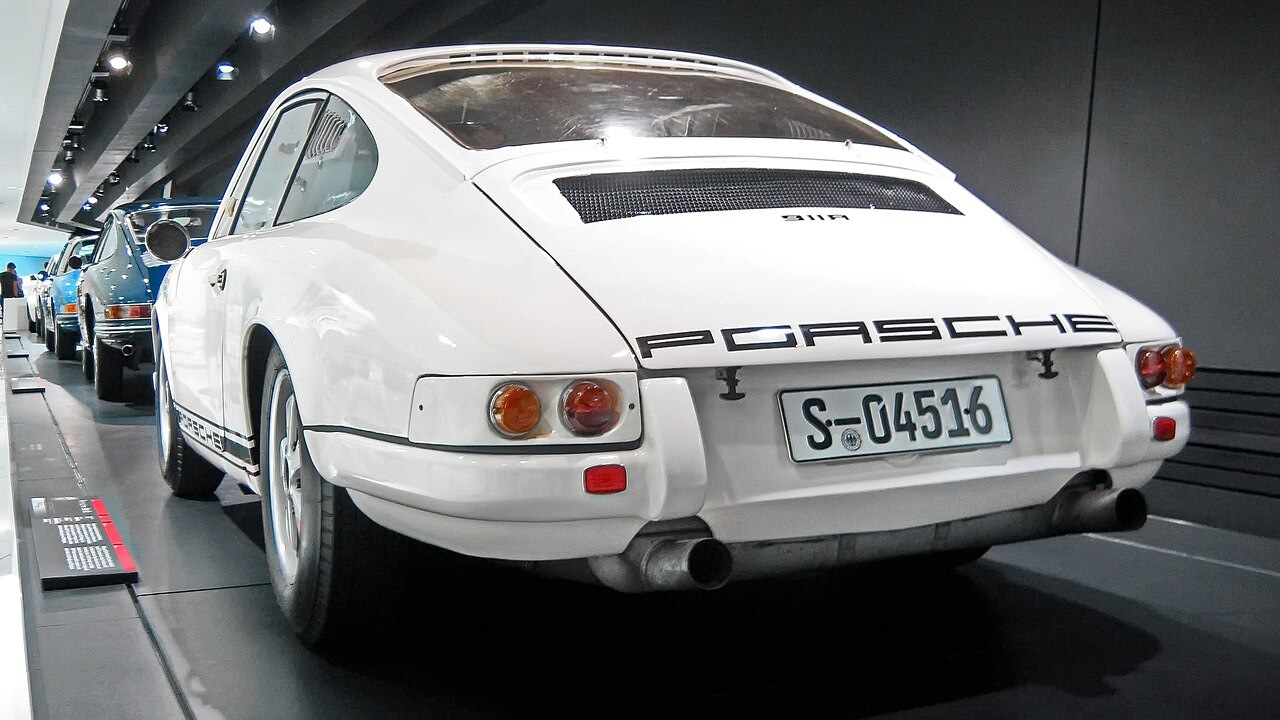
Lightweight lights, glazing and body details are useful clues, but they can be reproduced. Original identity requires chassis evidence, factory records and a coherent custody history. Document replacement bodies and engines clearly, especially where a car has moved between competition and road configurations. The photograph in this record is a programme illustration. It should not be used as a substitute for the documents needed to authenticate a particular numbered original.
Specifications and identity reference
| Programme reference | 1967 |
|---|---|
| Engine | 2.0-litre six-cylinder |
| Factory period output | 210 hp |
| Factory weight reference | Approximately 800 kg |
| Detailed factory count | 19 vehicles plus four test cars |
| Later factory shorthand | 20 cars; boundary differs |
| Customer split in detailed source | 15 of the 19; four retained for motorsport |
| Distinct later model | 991-generation 911 R |
Rarity and production scope
Verified original 911 R programme. Detailed Porsche history lists 19 vehicles plus four test cars; later factory features use 20. These scopes are not reconciled into an audited completed total, and the inventory’s 20-customer-car description is not adopted.
This is an Archive record. Concepts, restored heritage vehicles, works cars and competition programmes are not added to customer road-production totals. A programme profile does not establish how many physical chassis were made, and repeated exhibition appearances do not create additional vehicles.
What the photograph represents
Original-era Porsche 911 R photographed in a heritage display. Programme reference, distinct from the modern 991-generation edition; the photograph does not resolve the differing factory construction-count descriptions.
Related Porsche heritage profiles
Frequently asked questions
Were there 20 customer cars plus prototypes?
The detailed factory dossier instead describes 19 vehicles, including 15 for customers, plus four test cars.
Is the modern 911 R included?
No. The later 991-generation edition has a separate identity.
What is the production-count boundary for this profile?
Verified original 911 R programme. Detailed Porsche history lists 19 vehicles plus four test cars; later factory features use 20. These scopes are not reconciled into an audited completed total, and the inventory’s 20-customer-car description is not adopted.
Sources and further reading
- Porsche: detailed original R development and count table
- Porsche: later collector feature using 20-car wording
Research checked 17 October 2026. Linked factory, heritage and specialist-register records support the specifically attributed claims. Photographic descriptions identify the illustrated subject. Design analysis and suggested authentication steps are editorial interpretation.
Built in limited numbers
Verified original 911 R programme. Detailed Porsche history lists 19 vehicles plus four test cars; later factory features use 20. These scopes are not reconciled into an audited completed total, and the inventory’s 20-customer-car description is not adopted.
Gallery
Specifications
Factory specifications may vary by model year, market and configuration.
Identity & production
- Official model
- Porsche 911 R — Original Lightweight Programme
Sources and verification
Source citations are being prepared for this profile.