1966 Buick Riviera GS
Explore the 1966 Buick Riviera GS: sourced history, rarity, specifications, six FAQs and authentic photographs with visible credits.
1966 Buick Riviera GS brings a defined factory performance identity into Buick’s range. This profile explains its history, specification, production scope and collector significance with named sources and credited photographs.
Record: BUI-062 · Buick · 1966 · High.
1966 Buick Riviera GS: history and background
The 1966 Riviera introduced a larger second-generation shape while retaining rear-wheel drive. Its GS option belongs to that new car and must not simply inherit the 1965 Gran Sport’s exact equipment description. The Riviera Owners Association explains the changed body, chassis and ventilation features and gives a separate annual GS count.
Specifications and production scope
| Item | Documented reference |
|---|---|
| Production scope | 5,718 GS-option Rivieras reported by ROA for 1966; the whole Riviera year total is 45,348. |
| Reference year | 1966 |
| Factory/model identity | Riviera GS |
| Body | Second-generation two-door Riviera with GS option |
| Engine | 425 cu in Nailhead V8; standard GS engine specification distinct from optional dual-quad equipment |
| Manufacturer / origin | Buick / United States |
| Inventory reference | BUI-062 — Verified |
| Source basis | Manufacturer, museum, period literature or named historical reference; production qualifications retained below |
Design and engineering
The concealed headlights operated differently from the 1965 system, and the car’s wider, longer form created a new personal-luxury presence. Buick retained the Nailhead V8 for this season. The dual-four-barrel Super Wildcat installation was a separate and much smaller equipment scope, with a dealer/factory distinction during the year that matters when a particular engine is described.
Model identity and rarity
ROA’s production table reports 5,718 GS-option cars within 45,348 Rivieras. That researched figure replaces an unsupported smaller estimate. Do not describe every GS as one of the 179 dual-quad installations listed in the table. Factory option documents, engine identification and the car’s mechanical configuration should be read together before claiming a special engine subset.
Collector significance
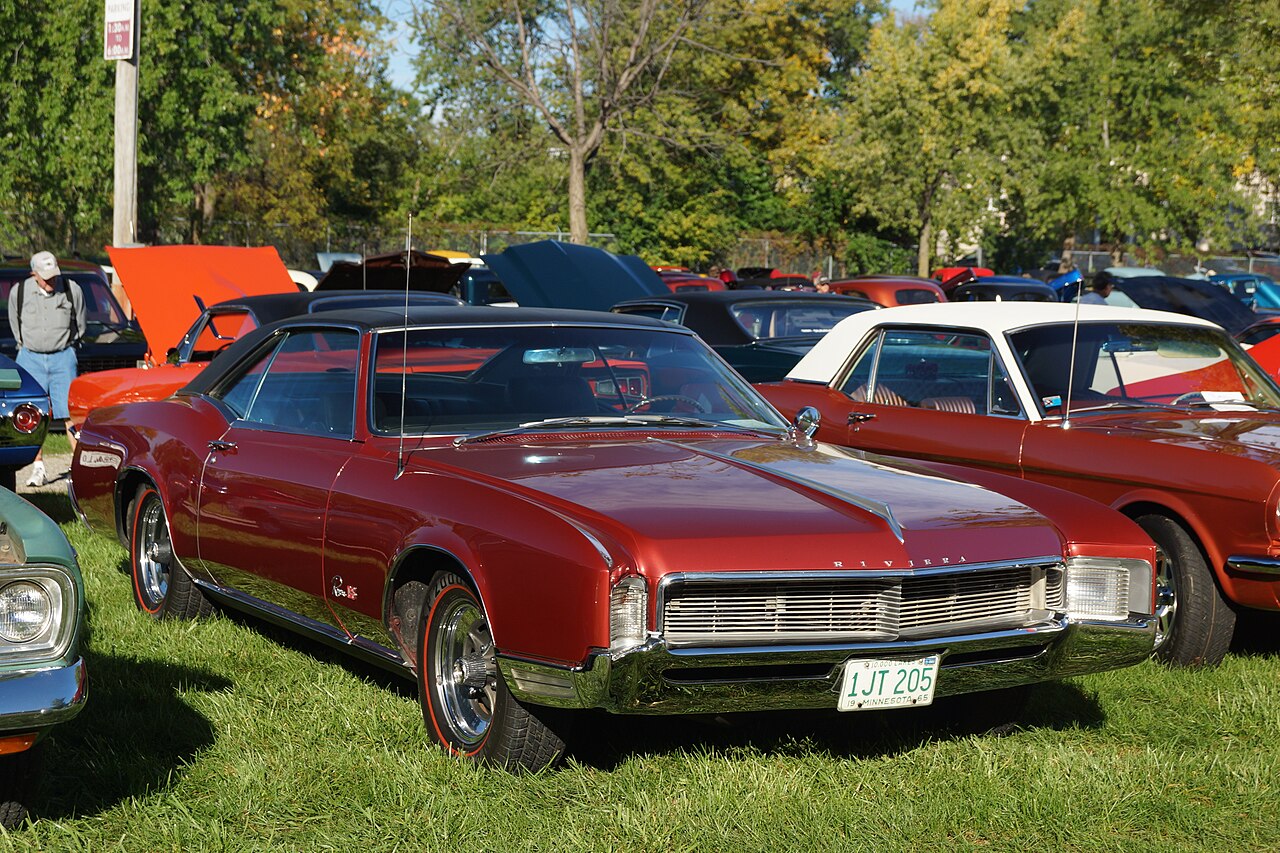
The 1966 GS is interesting precisely because it combines the new-generation Riviera with a defined performance/handling option. It allows a comparison with the 1965 car without collapsing the two seasons into one specification. The photograph is of a source-identified 1966 GS; badges illustrate the presentation, while documentary authentication of an individual chassis remains a separate task.
Compare related verified Buick profiles
Read this 1966 Riviera GS beside the 1963 Buick Riviera Silver Arrow I and 1965 Buick Riviera Gran Sport to place its second-generation two-door riviera with gs option in context. The related entries retain their own years, model identities and production scopes, so their figures are not added to this record.
Frequently asked questions
What GS production figure does ROA give?
The association reports 5,718 GS-option Rivieras for 1966, within 45,348 total Rivieras.
Did every GS have two four-barrel carburettors?
No. The dual-quad Super Wildcat was a separate, much smaller equipment scope and must not be assumed for every GS.
Was the 1966 Riviera front-wheel drive?
No. The ROA history explains that the Buick retained rear-wheel drive despite sharing the broader E-body setting with the Toronado.
Why is the Riviera GS included as a rare Buick?
5,718 GS-option Rivieras reported by ROA for 1966; the whole Riviera year total is 45,348. The scope is tied to this specific year, body or original project. It does not confer the same rarity on every car carrying the broader Riviera name, and it does not describe how many survive today.
What records help identify an individual Riviera GS?
Begin with the documented year and second-generation two-door riviera with gs option. Read the original model/body identification and surviving factory or collection records together. Record replacement components and restoration work separately. For a concept or racing car, its physical-car provenance is especially important; for an optioned production model, retain the equipment paperwork.
What photographs and credits accompany this profile?
The bundled photograph is retrieved from named Wikimedia Commons file records. Each image has a visible photographer or archive credit, its own licence link and an accurate subject caption. The pictures illustrate the documented model; they do not establish ownership, present condition or every component’s originality.
Sources and photo credits
Production figures retain the scope and qualifications of the named references. Manufacturer and museum records establish project identity; auction and historical model references supply additional body-specific context.
- Riviera Owners Association — evolution of the 1966 Riviera
- Riviera Owners Association — annual model and option production table
Photo: Greg Gjerdingen from Willmar, USA / Wikimedia Commons · CC BY 2.0. No local cropping, retouching or content removal. A source-supplied size variant is used where available.
Why this machine matters
The 1966 GS is interesting precisely because it combines the new-generation Riviera with a defined performance/handling option. It allows a comparison with the 1965 car without collapsing the two seasons into one specification. The photograph is of a source-identified 1966 GS; badges illustrate the presentation, while documentary authentication of an individual chassis remains a separate task.
Built in limited numbers
5,718 GS-option Rivieras reported by ROA for 1966; the whole Riviera year total is 45,348.
Gallery
Specifications
Factory specifications may vary by model year, market and configuration.
Identity & production
- Official model
- Riviera GS
- Base model
- Riviera
Powertrain & performance
- Engine
- 425 cu in Nailhead V8; standard GS engine specification distinct from optional dual-quad equipment