1950 Cadillac Series 61 Petit Pataud Le Mans Racer
Explore the 1950 Cadillac Series 61 Petit Pataud Le Mans Racer: history, design, scoped rarity, collector details, specifications and an authentic.
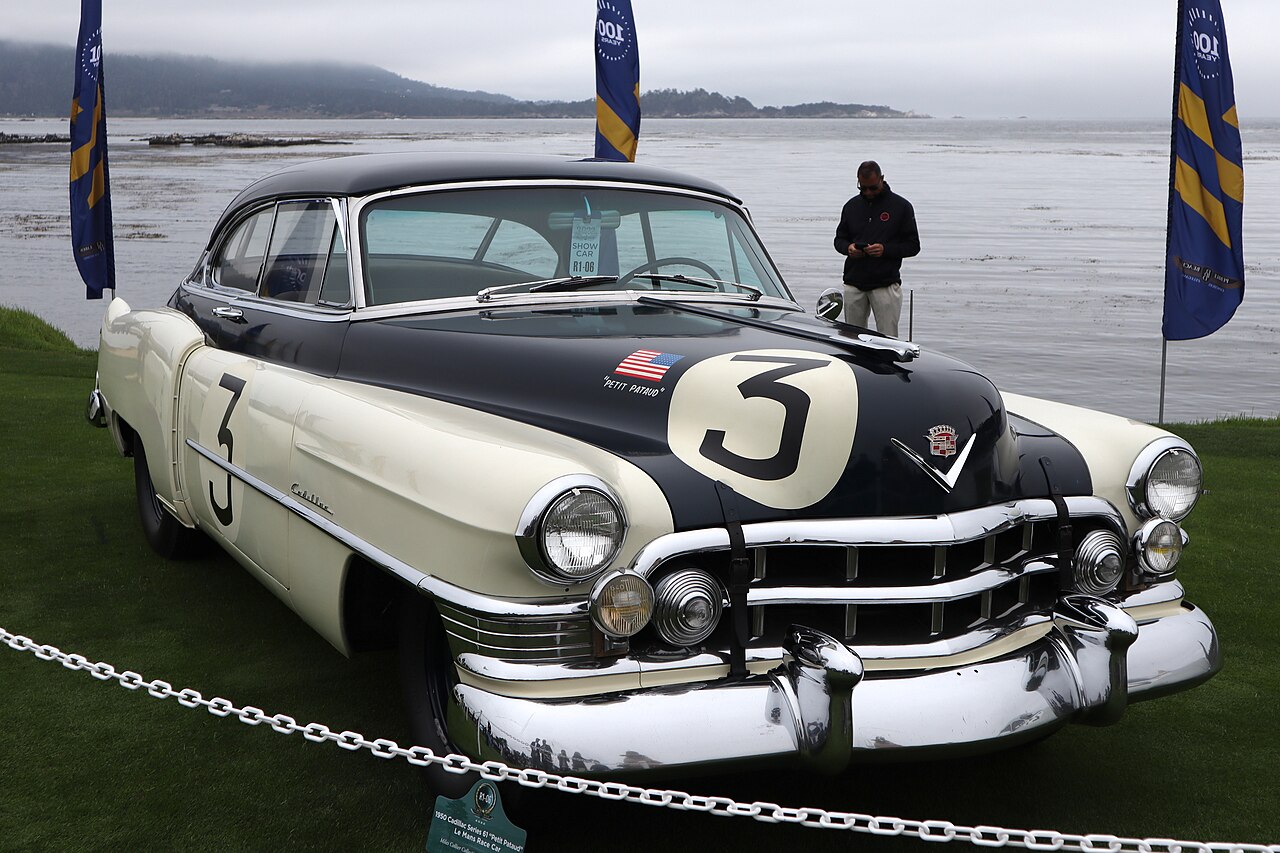
The 1950 Cadillac Series 61 Petit Pataud makes an unusual racing story visible through a largely recognizable road-car body. The coupe’s roof, grille and substantial passenger enclosure contrast sharply with Le Monstre, its experimental teammate. This profile records the individual Le Mans Cadillac identified by Revs Institute as serial 506111399, rather than inventing a one-built production edition of the entire Series 61.
History, identity and design
The selected Pebble Beach photograph shows a dark bonnet, pale body sides and prominent competition number three. Its rounded roof and broad grille still read as a Cadillac coupe, even with racing identification applied. That recognizability is the car’s strongest visual feature. A reader can understand the unusual nature of its Le Mans entry without needing to imagine a completely stripped or radically rebodied machine. The period project brought a large American production-car shape into a setting normally associated with very different sports-car proportions.
Revs Institute documents the car’s serial, Cadillac V-8 specification and participation with Miles and Sam Collier. It records a tenth-place finish, with the companion Le Monstre finishing behind it. These facts make the individual vehicle historically meaningful, but the result should not be applied to another Series 61 coupe. Nor should a modern photograph of a replica be accepted on the strength of the number three alone. The selected source identifies the historic Petit Pataud at the 2022 Pebble Beach event, and its body and competition markings are visibly consistent with that subject.
The paired-car story is a valuable comparison rather than a reason to merge identities. Cunningham’s experiment included a more recognizable Cadillac and a radically different rebodied car. They share a programme and a race, but their serials and physical bodies remain distinct. The inventory’s two-car summary row is therefore held as overlapping coverage. Keeping the two racers in separate individual-chassis profiles gives each its own photograph, history and collector reference, while preventing a third page from masquerading as another unique car.
As visual interpretation, Petit Pataud is compelling because its ordinary luxury-car roofline becomes extraordinary in competition context. The image preserves the present-day display chain and event setting, making clear that this is a later view of the historic machine. A collection file should connect serial evidence, race documentation and subsequent restoration or exhibition records. A current photograph alone cannot establish every component’s originality. The individual car’s documented Le Mans identity provides enough significance without inventing celebrity associations, modern performance tests or unsupported survival statistics.
Specifications and production scope
| Reference year | 1950 |
|---|---|
| Subject | Series 61 Petit Pataud Le Mans Racer |
| Engineering context | 331-cubic-inch overhead-valve V-8 |
| Design focus | The recognizable Cadillac coupe that finished tenth |
| Rarity scope | One identified original competition chassis: 506111399. The figure is an individual archive identity, not Series 61 manufacturing output. |
| Exact scoped build tally | 1 |
| Inventory reference | CAD-044 — Verified |
Keeping the collector record useful
A useful Series 61 file separates the model story from the life of an individual vehicle. Record the body or edition designation exactly as it appears in matching documents, then keep clear front, side, rear and cabin photographs with the dates attached. Changes made during restoration deserve their own entries, including the reason for the work and the evidence used. That approach lets future readers compare the physical car with this profile without confusing a present appearance, an original factory specification and an attractive historical association.
Documentary photograph
The historic 1950 Cadillac Petit Pataud at the 2022 Pebble Beach Concours; a later documentary view of the individual Le Mans car. The source image was checked for the pictured body or physical project and its file-specific reuse terms. The visible photograph caption links the photographer, original file and licence so the illustration can be traced independently of the article.
Frequently asked questions
Which serial identifies Petit Pataud?
The museum’s individual record gives 506111399. That serial anchors this one-car archive, keeping it distinct from Le Monstre and from other 1950 Series 61 coupes.
Why is CAD-045 not another imported car?
That workbook row describes the two-car 1950 Le Mans effort already covered by Le Monstre and Petit Pataud. Importing it as a third unique vehicle would duplicate the same physical subjects.
What production scope applies to the 1950 Series 61 Petit Pataud Le Mans Racer?
One identified original competition chassis: 506111399. The figure is an individual archive identity, not Series 61 manufacturing output.
What should a collector document on an individual example?
Keep the vehicle’s identification, body or edition evidence, dated photographs and restoration records together. This Series 61 profile explains the model subject; ownership, original finish and present condition require records that match the individual car being considered.
Does this profile provide a complete original specification?
The specification table records the supported identity and engineering context for this year. An exterior photograph cannot establish every optional feature or later component change. Preserve any matching build record before adding more precise equipment claims to the Series 61 Petit Pataud Le Mans Racer file.
Who took the photograph and how may it be reused?
The bundled image is credited to Prova MO, under CC BY-SA 4.0 on its individual Commons file page. Keep the visible named credit and licence link. The supplied source version has no local image edits; background signage and photographer marks remain where present.
Sources
- Primary museum, manufacturer, event or contemporary source
- Primary museum, manufacturer, event or contemporary source
- Photograph: 1950 Cadillac Petit Pataud at PB 2022.jpg
Related Cadillac profiles
Compare the body forms and clearly scoped identities in 1950 Cadillac Series 61 Le Monstre Le Mans Racer and 1953 Cadillac Eldorado Convertible. Each profile keeps its own year, photograph and rarity scope.
Built in limited numbers
One identified original competition chassis: 506111399. The figure is an individual archive identity, not Series 61 manufacturing output.
Gallery
Specifications
Factory specifications may vary by model year, market and configuration.
Identity & production
- Official model
- Series 61 Petit Pataud Le Mans Racer