1938 Buick Century Convertible Coupe 66-C
Explore the 1938 Buick Century Convertible Coupe 66-C: sourced history, rarity, specifications, six FAQs and authentic photographs with visible credits.
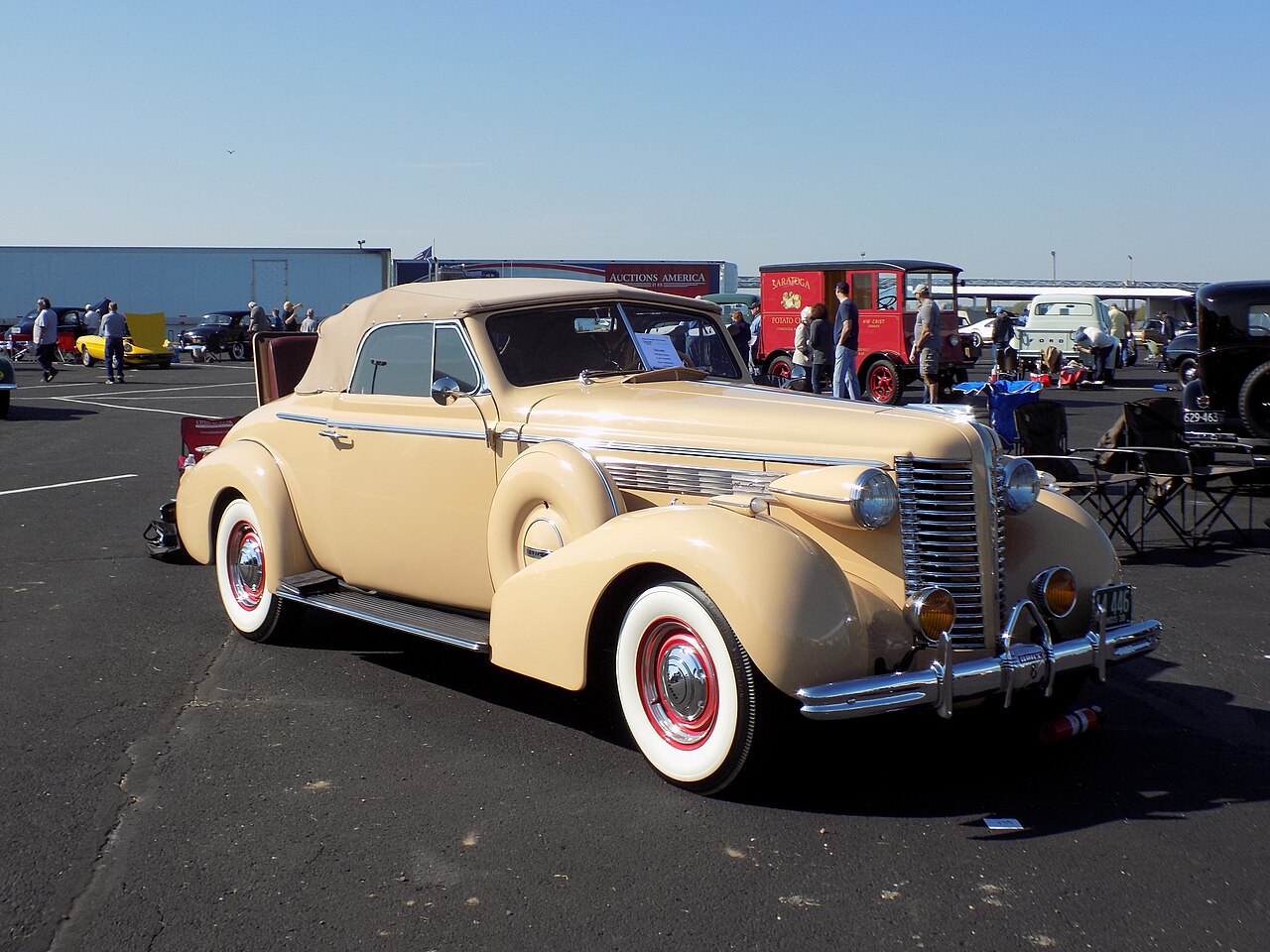
1938 Buick Century Convertible Coupe 66-C brings a scarce, body-specific open-car story to Buick’s catalogue. This profile explains its history, specification, production scope and collector significance with named sources and credited photographs.
Record: BUI-019 · Buick · 1938 · High.
1938 Buick Century Convertible Coupe 66-C: history and background
The prewar Century combined Buick’s larger straight-eight engine with a comparatively compact body. The 1938 convertible coupe makes that formula especially attractive: substantial mechanical specification, an open roof and a rear rumble-seat arrangement. It is distinct from the four-door Century convertible phaeton, whose separate production total is sometimes wrongly attached to any open 1938 Century.
Specifications and production scope
| Item | Documented reference |
|---|---|
| Production scope | 642 model 66-C convertible coupes reported for 1938; other Century bodies excluded. |
| Reference year | 1938 |
| Factory/model identity | Century Convertible Coupe 66-C |
| Body | Two-door convertible coupe with rumble seat |
| Engine | 320.2 cu in overhead-valve straight-eight; 141 hp period rating |
| Manufacturer / origin | Buick / United States |
| Inventory reference | BUI-019 — Verified |
| Source basis | Manufacturer, museum, period literature or named historical reference; production qualifications retained below |
Design and engineering
The reference specifications identify the convertible coupe as model 66-C, on a 126-inch wheelbase with a 320.2-cubic-inch engine. The 141-horsepower figure is a period rating and should not be compared directly with modern installed-engine figures. The long hood and sweeping wings are central to the car’s appearance, but the engine-and-body combination defines the historical model.
Model identity and rarity
The reported 642-car production total applies to this coupe body. A Series 60 sedan or four-door convertible does not inherit it. Verify a surviving car’s body number, frame and engine identification against the 1938 literature. Restored examples can differ in wheels, trim, colours and accessories, so a stylish presentation alone is not an authenticity certificate.
Collector significance
This Century offers a particularly clear illustration of prewar Buick’s performance and comfort ambitions. Its appeal is more specific than a generic claim that all old convertibles are rare. A useful profile names the model, explains the rumble-seat body and anchors the count to one season. That combination also prevents the car being duplicated under both “Century convertible” and “66-C convertible coupe.”
Compare related verified Buick profiles
Read this 1938 Century Convertible Coupe 66-C beside the 1923 Buick 23-Six-54 Sport Roadster and 1938 Buick Y-Job to place its two-door convertible coupe with rumble seat in context. The related entries retain their own years, model identities and production scopes, so their figures are not added to this record.
Frequently asked questions
How many 1938 Century convertible coupes were built?
The reference guide reports 642 model 66-C cars for 1938.
Is this the 208-car convertible phaeton?
No. That figure concerns the different four-door Century phaeton body. This profile covers the two-door convertible coupe.
Which engine powered the Century?
The specified engine is Buick’s 320.2-cubic-inch overhead-valve straight-eight, with a period rating of 141 horsepower.
Why is the Century Convertible Coupe 66-C included as a rare Buick?
642 model 66-C convertible coupes reported for 1938; other Century bodies excluded. The scope is tied to this specific year, body or original project. It does not confer the same rarity on every car carrying the broader Century name, and it does not describe how many survive today.
What records help identify an individual Century Convertible Coupe 66-C?
Begin with the documented year and two-door convertible coupe with rumble seat. Read the original model/body identification and surviving factory or collection records together. Record replacement components and restoration work separately. For a concept or racing car, its physical-car provenance is especially important; for an optioned production model, retain the equipment paperwork.
What photographs and credits accompany this profile?
The bundled photograph is retrieved from named Wikimedia Commons file records. Each image has a visible photographer or archive credit, its own licence link and an accurate subject caption. The pictures illustrate the documented model; they do not establish ownership, present condition or every component’s originality.
Sources and photo credits
Production figures retain the scope and qualifications of the named references. Manufacturer and museum records establish project identity; auction and historical model references supply additional body-specific context.
- Historical model table — 1936–1938 Buick, model 66-C
- Classic Car Database — 1938 Century convertible specifications
Photo: Greg Gjerdingen from Willmar, USA / Wikimedia Commons · CC BY 2.0. No local cropping, retouching or content removal. A source-supplied size variant is used where available.
Why this machine matters
This Century offers a particularly clear illustration of prewar Buick’s performance and comfort ambitions. Its appeal is more specific than a generic claim that all old convertibles are rare. A useful profile names the model, explains the rumble-seat body and anchors the count to one season. That combination also prevents the car being duplicated under both “Century convertible” and “66-C convertible coupe.”
Built in limited numbers
642 model 66-C convertible coupes reported for 1938; other Century bodies excluded.
Gallery
Specifications
Factory specifications may vary by model year, market and configuration.
Identity & production
- Official model
- Century Convertible Coupe 66-C
- Base model
- Century
Powertrain & performance
- Engine
- 320.2 cu in overhead-valve straight-eight; 141 hp period rating