2010 Porsche 911 GT2 RS — 997
Explore the 911 GT2 RS — 997: history, verified identity, specification references, rarity evidence and real credited photos.
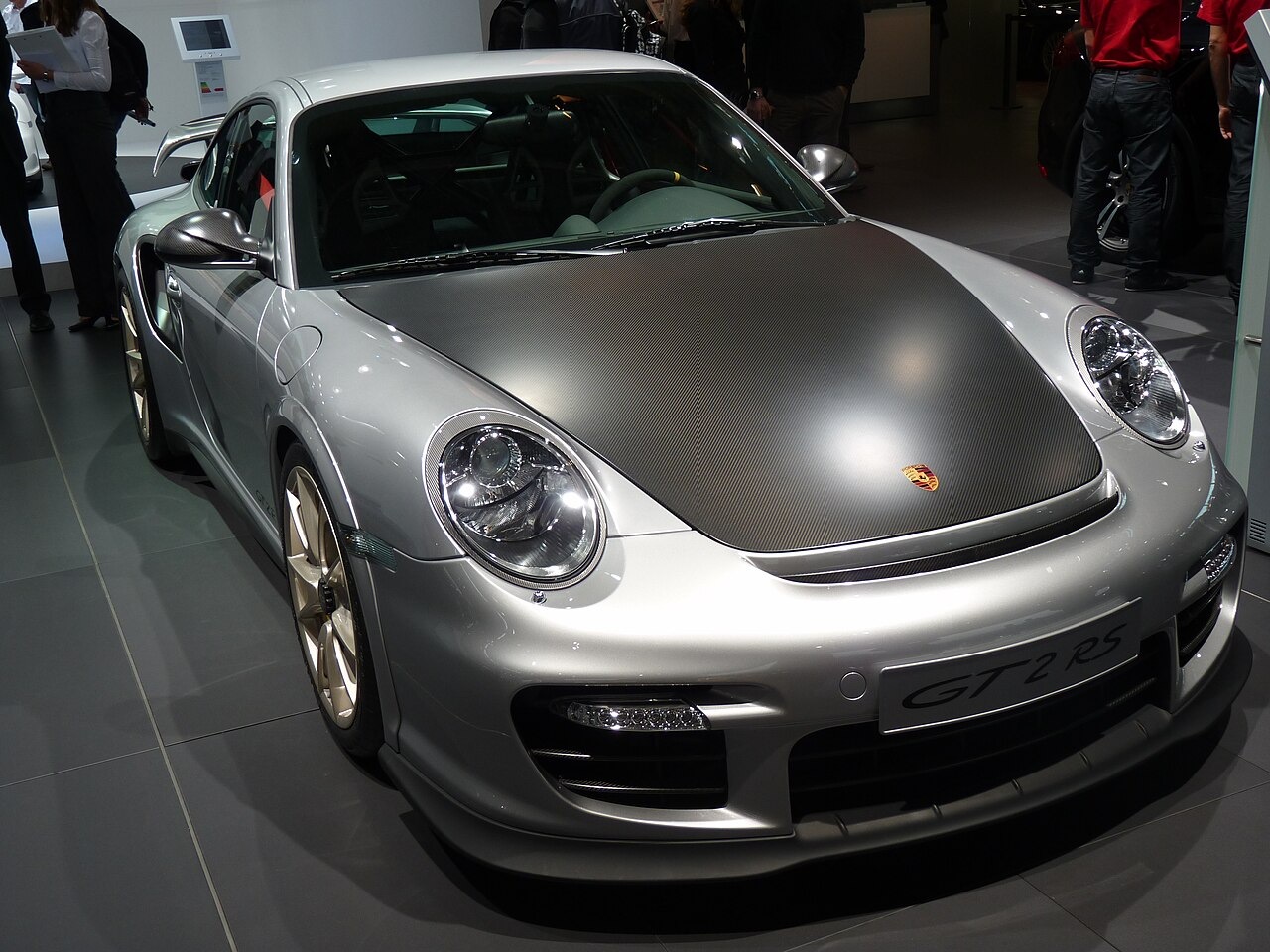
The 2010 Porsche 911 GT2 RS took the 997 Turbo-derived road-car formula to a more focused extreme: rear-wheel drive, a six-speed manual gearbox and a 3.6-litre twin-turbo flat-six. Porsche announced a 500-car worldwide limit. The manufacturer’s Dutch release gives 456 kW and 620 metric horsepower, alongside a 1,370 kg reference weight. These period specifications describe the 997 programme, separate from the later 991 GT2 RS and its track-only Clubsport derivative.
The 2010 GT2 RS programme
Porsche’s national-office announcement introduced the GT2 RS in May 2010, ahead of its public Moscow appearance and market launch later that year. The chronology separates an announcement from a show debut and customer delivery. This article uses 2010 as the programme reference without implying that every car was registered in that calendar year. It also preserves the full generation name, since the same badge returned with substantially different engineering in the following 911 generation.
Porsche Netherlands: original GT2 RS announcement
Twin turbocharging and a manual rear-drive layout
The cited Dutch release specifies a 3.6-litre engine with two turbochargers, rear-wheel drive and a six-speed manual transmission. The stated output is 456 kW or 620 metric horsepower. This combination distinguishes the car from all-wheel-drive Turbo models and naturally aspirated GT3 derivatives. In a technical record, keep the output unit visible; metric horsepower and mechanical horsepower are not interchangeable numbers even where English marketing material simply uses the abbreviation hp.
Weight reduction and the performance brief
The same announcement gives a 1,370 kg reference and describes reduced mass relative to the preceding GT2. The useful interpretation is the relationship between power, traction layout and weight reduction. These are launch specifications, not a current weighing of the photographed car. Equipment, fuel and subsequent modifications can affect an individual measurement, so an inspection report should state its conditions rather than assume that every present-day example reproduces a single press-release weight.
Porsche Netherlands: original GT2 RS announcement
A limited run and a sold-out announcement
Porsche announced a worldwide limit of 500 and later issued a sold-out statement through its North American company. Sold out describes allocation or sales status, not an independently audited completion ledger. Both sources support the distinct programme without requiring those concepts to be merged. The edition figure is retained as a factory reference, while the structured completed-production field remains unfilled. Later road GT2 RS and Clubsport programmes have their own numbers.
Porsche Cars North America: sold-out announcement, distributed release
Identifying an original 997 GT2 RS
Use the original chassis and build records to establish the model before comparing visible RS details. Track preparation, replacement panels and later performance upgrades should each retain their own description. The photograph illustrates a car catalogued as the 2010 model, with no claim to verify its present mechanical condition or complete component originality. For a particular example, original documentation and dated service records offer a stronger foundation than badges, paint or a quoted peak power figure alone.
Specifications and identity reference
| Programme reference | 2010 |
|---|---|
| Generation | 997 |
| Engine | 3.6-litre twin-turbo flat six |
| Factory output | 456 kW / 620 metric hp |
| Drive | Rear-wheel drive |
| Transmission | Six-speed manual |
| Factory reference weight | 1,370 kg |
| Announced worldwide limit | 500 |
Rarity and production scope
Verified 997 GT2 RS programme with a 500-car announced worldwide limit. A subsequent manufacturer sold-out statement is sales/allocation evidence, not a new independently audited completed-production count. Later GT2 RS generations and Clubsport models are separate.
What the photograph represents
A Porsche 997 GT2 RS at the 2010 Paris motor show. Programme illustration, not a later 991 model or an inspection of its original engine and gearbox.
Related Porsche heritage profiles
Frequently asked questions
Does sold out establish an independent completed-build audit?
No. It establishes the manufacturer’s reported sales or allocation status.
Is this the later seven-speed PDK GT2 RS?
No. The 997 model uses a six-speed manual gearbox.
What is the production-count boundary for this profile?
Verified 997 GT2 RS programme with a 500-car announced worldwide limit. A subsequent manufacturer sold-out statement is sales/allocation evidence, not a new independently audited completed-production count. Later GT2 RS generations and Clubsport models are separate.
Sources and further reading
- Porsche Netherlands: original GT2 RS announcement
- Porsche Cars North America: sold-out announcement, distributed release
Research checked 17 October 2026. Linked factory announcements and heritage records support the specifically attributed claims. Photographic descriptions identify the illustrated subject. Design analysis and suggested authentication steps are editorial interpretation.
Built in limited numbers
Verified 997 GT2 RS programme with a 500-car announced worldwide limit. A subsequent manufacturer sold-out statement is sales/allocation evidence, not a new independently audited completed-production count. Later GT2 RS generations and Clubsport models are separate.
Gallery
Specifications
Factory specifications may vary by model year, market and configuration.
Identity & production
- Official model
- Porsche 911 GT2 RS — 997
Sources and verification
Source citations are being prepared for this profile.