1992 Porsche 911 Turbo S Leichtbau — 964
Explore the 911 Turbo S Leichtbau — 964: history, verified identity, specification references, rarity evidence and real credited photos.
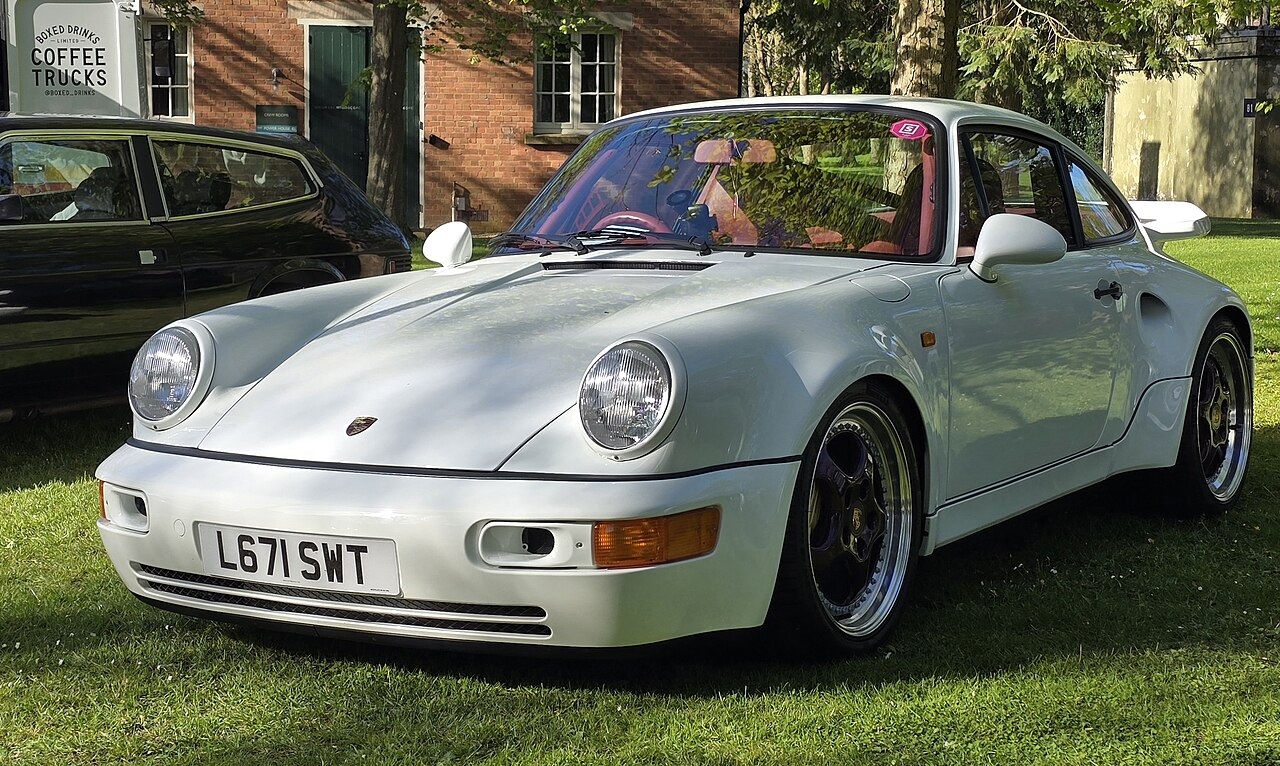
The 964 Turbo S Leichtbau combined a stronger turbocharged engine with a radical reduction in comfort equipment. Porsche’s history gives 381 PS and a historical production reference of 86 cars. The programme was developed with the Exclusive and Motorsport departments in the early 1990s. This profile concerns that lightweight 3.3-litre special, keeping later Turbo S flatnose variants, ordinary Turbos and independent conversions outside the selected identity.
A Turbo S defined by more than added power
Porsche’s Turbo S history identifies the 1992 model as the first series-produced Turbo S and emphasises weight reduction alongside engine output. The original brief focused on maximum performance with road homologation. That makes the Leichtbau a particular model programme rather than a generic power upgrade. Later Turbo S names can refer to different generations and purposes, so the 964 and lightweight qualifiers remain central to the profile’s title and indexing.
Porsche: 964 Turbo S history, equipment and 86-car reference
The 3.3-litre turbo engine reference
The factory describes a 3.3-litre turbocharged flat six modified with increased boost pressure and other changes to produce 381 PS. This is the historical programme reference, not a measurement of every surviving car. Software, engine rebuilds and replacement turbochargers can change the present specification. For an individual example, retain its original engine identity and service history instead of inferring current output from the model’s published figure.
The equipment removed for the lightweight brief
Porsche lists omitted power steering, air conditioning, radio, rear seats and dual-mass flywheel, alongside lightweight body panels. The particular combination explains the model better than a weight-saving slogan alone. A surviving car may have had equipment reinstated or changed, and those alterations should be described. Original build documentation is especially useful where a visual inspection cannot reveal whether the present cabin matches the delivered specification.
Porsche: 964 Turbo S history, equipment and 86-car reference
The 86-car historical scope
Both the later Turbo S history and an earlier Exclusive department account give 86 examples, with the latter describing 1992–1993 construction context. That is an attributed manufacturer historical reference. It is not a newly reconciled register of completed chassis and current survivors. Keep the later Turbo S variants separate rather than adding their quantities or treating every rare 964 Turbo configuration as one edition.
Porsche: Exclusive and Motorsport cooperation
Identifying a genuine Leichtbau
Compare the factory model designation, original build data, chassis and engine evidence, and the history of body and interior changes. Colour, wheels and external details can be copied and cannot authenticate the car on their own. A family-reference photograph, if used, must say explicitly that it does not establish Leichtbau identity. Original provenance and present mechanical condition remain different questions, each requiring evidence specific to the individual vehicle.
Specifications and identity reference
| Reference year | 1992 |
|---|---|
| Construction context | 1992–1993 in earlier factory history |
| Engine | 3.3-litre turbocharged flat six |
| Factory output | 381 PS |
| Historical production reference | 86 |
| Development | Exclusive / Motorsport cooperation |
| Brief | Lightweight road-homologated Turbo S |
| Excluded | Later Turbo S variants and conversions |
Rarity and production scope
Verified 964 Turbo S Leichtbau programme. Porsche reports 86 examples; construction context spans 1992–1993 in the earlier factory account. This remains an attributed historical figure, not a newly audited completed or surviving chassis total.
What the photograph represents
Porsche 964 Turbo S Leichtbau catalogued as a 1993 example. Exact-model illustration for the 1992–1993 programme, not an independently authenticated chassis-production audit.
Related Porsche heritage profiles
Frequently asked questions
Is every 964 Turbo S a Leichtbau?
No. The selected lightweight programme has a specific identity and should not be merged with later variants.
Is 86 a current survivor count?
No. It is Porsche’s historical production reference.
What is the production-count boundary for this profile?
Verified 964 Turbo S Leichtbau programme. Porsche reports 86 examples; construction context spans 1992–1993 in the earlier factory account. This remains an attributed historical figure, not a newly audited completed or surviving chassis total.
Sources and further reading
- Porsche: 964 Turbo S history, equipment and 86-car reference
- Porsche: Exclusive and Motorsport cooperation
Research checked 17 October 2026. Linked factory, heritage and specialist-register records support the specifically attributed claims. Photographic descriptions identify the illustrated subject. Design analysis and suggested authentication steps are editorial interpretation.
Built in limited numbers
Verified 964 Turbo S Leichtbau programme. Porsche reports 86 examples; construction context spans 1992–1993 in the earlier factory account. This remains an attributed historical figure, not a newly audited completed or surviving chassis total.
Gallery
Specifications
Factory specifications may vary by model year, market and configuration.
Identity & production
- Official model
- Porsche 911 Turbo S Leichtbau — 964
Sources and verification
Source citations are being prepared for this profile.