2017 Mercedes-AMG GT C Edition 50 Roadster
Explore the 2017 Mercedes-AMG GT C Edition 50 Roadster: programme history, design, verified rarity scope, specifications and credited photography.
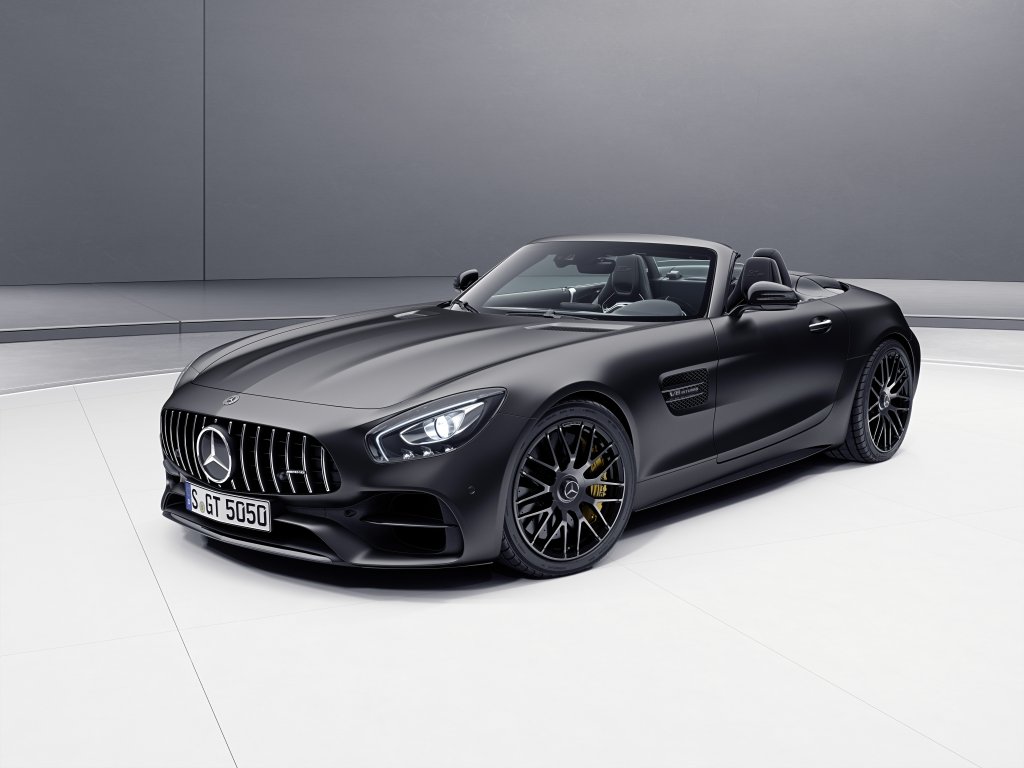
The GT C Edition 50 Roadster gives AMG’s anniversary GT C package an open roof. Announced in February 2017, it combines the wide rear body and turbocharged V8 of GT C with a folding fabric top and edition-specific finishes. It belongs to the same anniversary story as the Coupé, with its own body configuration.
History and verified programme identity
Mercedes-AMG presented the special Roadster in the run-up to the Geneva Motor Show. The company’s 1967 foundation supplies the reason for the Edition 50 name. Its worldwide 500-car reference and separate US allocation statements should remain clearly attributed. The reference year here is the 2017 introduction; a photograph or a US 2018 model-year title describes another date convention rather than a second programme.
Engineering and design
The 3,982 cc twin-turbocharged V8 is paired with a rear-mounted seven-speed dual-clutch transmission. GT C also uses rear-wheel steering and an electronically controlled differential. The fabric roof preserves a conventional windscreen and side windows, making this a different proposition from a roofless speedster. Open-top packaging is part of the body’s identity, rather than a removable styling accessory. Reading this design as a complete system is more useful than treating its most conspicuous detail as a separate accessory. Body shape, packaging and the intended operating environment influence one another. The specification describes the original programme; equipment fitted to another derivative should not be transferred simply because its badge looks similar. Keep metric power, mechanical horsepower and market-specific published figures in their original conventions when comparing technical records.
The physical car in the supplied photograph
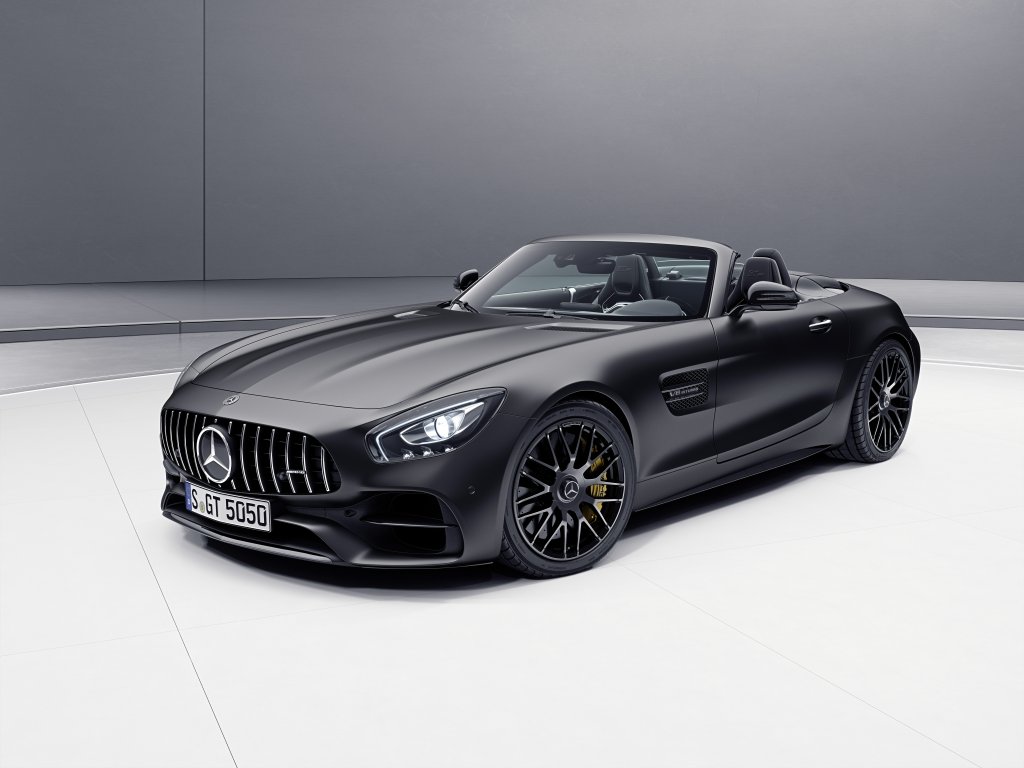
Manufacturer-supplied front three-quarter image of the dark GT C Roadster Edition 50 with its roof open. The media asset is explicitly titled for Edition 50; the open body and coordinated dark finishes match the release.
Edition identity and design significance
The official exterior image shows the correct dark Edition 50 Roadster with its coordinated wheel and trim treatment. Its dark treatment changes the way the long bonnet, broad rear shoulders and open cockpit relate visually. The Roadster retains a more horizontal upper profile than the closed car, while sharing the anniversary theme. The anniversary identity should be supported by original equipment records as well as visible finishes.
Collecting and chassis evidence
Retain roof-service records and original edition paperwork together. The condition of the fabric top, seals and drains belongs alongside mechanical maintenance. A change of wheels or exterior trim should be documented without claiming it creates another original allocation. Begin an individual vehicle file with the permanent chassis identity, dated manufacturer specification and original delivery paperwork. Retain later invoices and dated photographs beside that starting record. Paint, wheels and badges can be replaced; they describe current appearance rather than proving original allocation. A documented repair or specification change deserves its own date and explanation. An edition plaque is most useful when it agrees with the factory record. Do not turn a registration year, current plate number or event appearance into another manufactured vehicle.
Related Mercedes-Benz designs and meaningful comparisons
The closed GT C Edition 50 provides the direct body comparison. GT R Roadster later combines an open body with another performance brief and a separately announced 750-car limit. Similar GT names do not make those allocations interchangeable.
Reading the sources
The programme sources and the photograph answer different questions. Manufacturer and custodial records establish the original model, Type, category and published production scope. The creator’s file establishes the pictured subject, setting and image permission. An individual chassis history can then add ownership, competition entries and dated repairs without changing the scope of the original programme. Build references are not survivor counts, and a later specification does not automatically become an additional newly manufactured vehicle. Where primary evidence does not establish a complete fabrication census, that field remains unassigned.
Specifications and rarity evidence
| Programme reference year | 2017 |
|---|---|
| Model / Type | GT C Edition 50 Roadster — R 190 AMG GT |
| Body / competition role | Two-seat fabric-roof roadster |
| Engine | 3,982 cc twin-turbocharged V8 |
| Transmission | Seven-speed dual-clutch rear transaxle |
| Body | Two-seat Roadster with folding fabric roof |
| Published build / register reference | 500 |
| Separately audited completed tally | Not assigned |
| Count scope | The manufacturer gives a 500-car worldwide Edition 50 reference in its Roadster announcement and compares it with the Coupé. The two-body allocation is not independently reconciled; no completed body-specific tally is assigned. Both profiles retain one shared programme key and a conservative screening bound of 1,000 rather than adding unverified completed totals. |
| Manufacturer / archive identity | Mercedes-AMG GT C Edition 50 Roadster |
Frequently asked questions
How rare is the GT C Edition 50 Roadster?
The manufacturer gives a 500-car worldwide Edition 50 reference in its Roadster announcement and compares it with the Coupé. The two-body allocation is not independently reconciled; no completed body-specific tally is assigned. Both profiles retain one shared programme key and a conservative screening bound of 1,000 rather than adding unverified completed totals.
How is GT C Edition 50 Roadster classified?
This is a named original Mercedes-Benz road-car programme or factory body configuration within a qualifying low-volume family. The source-defined reference is below 7,500. Completed manufacture, shared allocation ceilings and current survivor counts remain separately labelled.
Which technical details are established for the programme?
The manufacturer programme record supports engine: 3,982 cc twin-turbocharged V8; transmission: Seven-speed dual-clutch rear transaxle; body: Two-seat Roadster with folding fabric roof. These are programme or explicitly attributed photo references. A particular surviving car’s engine, chassis repairs and competition preparation require its own dated documentation.
Does the photographed appearance establish factory originality?
The caption records a source-identified GT C Edition 50 Roadster subject and its documented setting. It establishes the illustration’s scope, while original components, restoration work and individual race provenance require chassis-specific evidence. A competition number, current paint or museum display is not used as an originality certificate.
What rarity or archive scope is verified?
The manufacturer gives a 500-car worldwide Edition 50 reference in its Roadster announcement and compares it with the Coupé. The two-body allocation is not independently reconciled; no completed body-specific tally is assigned. Both profiles retain one shared programme key and a conservative screening bound of 1,000 rather than adding unverified completed totals.
What credit and reuse terms accompany the image?
Mercedes-Benz AG / Mercedes-Benz Media Newsroom USA (manufacturer-supplied image; photographer not named) via Mercedes-Benz Media Newsroom USA, under Manufacturer editorial-use permission. The original file and licence are linked with the image. Retain the creator, source and licence when uploading, exporting or reusing it; local retouching and synthetic enlargement have not been performed.
Related Mercedes-Benz profiles
Sources and photo credits
Photograph: Mercedes-Benz AG / Mercedes-Benz Media Newsroom USA (manufacturer-supplied image; photographer not named) via Mercedes-Benz Media Newsroom USA original source, Manufacturer editorial-use permission. Original image or source-provided thumbnail supplied without local cropping, retouching or synthetic enlargement. Manufacturer permission for editorial use only. Advertising, marketing and merchandising prohibited. Copyright remains with Mercedes-Benz. Retain manufacturer source and credit; no Creative Commons licence is claimed.
Built in limited numbers
The manufacturer gives a 500-car worldwide Edition 50 reference in its Roadster announcement and compares it with the Coupé. The two-body allocation is not independently reconciled; no completed body-specific tally is assigned. Both profiles retain one shared programme key and a conservative screening bound of 1,000 rather than adding unverified completed totals.
Gallery
Specifications
Factory specifications may vary by model year, market and configuration.
Identity & production
- Official model
- GT C Edition 50 Roadster