2024 Hyundai IONIQ 5 N NPX1 Concept
Hyundai IONIQ 5 N NPX1: 2024 Tokyo introduction, prototype performance parts, exact physical identity and a credited Busan photograph.
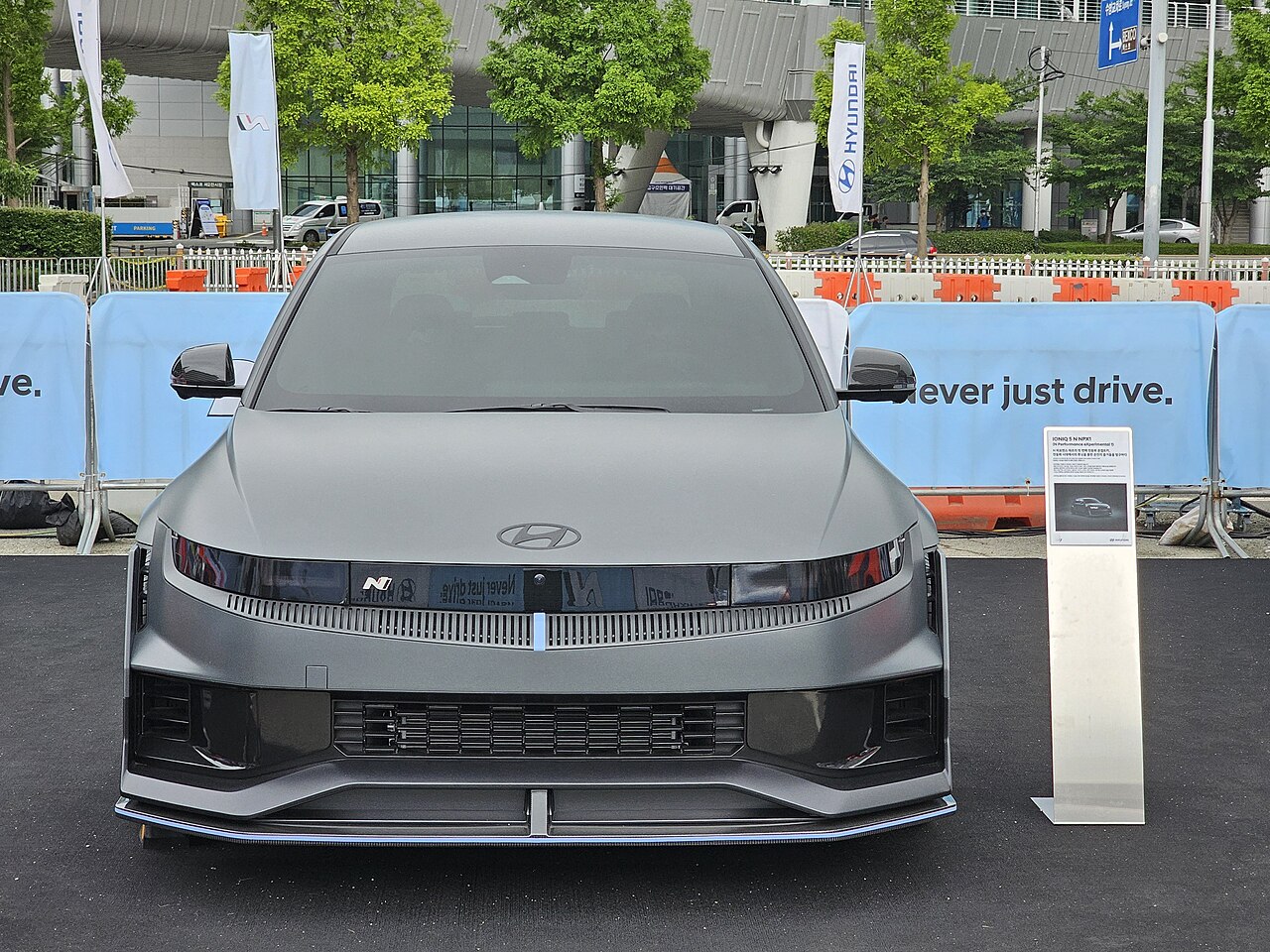
The 2024 Hyundai IONIQ 5 N NPX1 Concept presents a coordinated set of prototype performance parts on a physical electric car. Its correct Tokyo introduction year is retained, with the workbook’s earlier heading recorded as an alias for duplicate protection.
Origins and the correct historical identity
Hyundai unveiled NPX1 at Tokyo Auto Salon on 12 January 2024. The announcement describes prototype N Performance Parts, including carbon-fibre aero components, hybrid carbon wheels, brake pads and lowering springs. NPX1 is the concept’s name. These parts do not establish a numbered retail edition or an edition-specific increase in traction output.
Design: what makes IONIQ 5 N NPX1 Concept distinctive
The supplied front view shows a pale body set off by darker lower elements and a broad front opening. The changes concentrate visual weight near the ground, giving the car a focused impression while preserving its familiar rectangular lighting identity. This is a useful documentary view of the named concept’s exterior. It does not show every rear aero or cabin feature, so those details rely on the separate programme record.
Engineering and the concept brief
Prototype performance parts need a distinction between the component proposal and an independently verified improvement. A lower ride height, a brake-pad choice and an aerodynamic addition address different engineering concerns. Their presence does not produce a universal percentage gain. The archive keeps the manufacturer’s named prototype package together and avoids a fictional road-test verdict. Future part-specific technical documentation could add measured results within its proper scope.
Why this Hyundai belongs in the design archive
NPX1 gives a collection a clear example of an electric performance car being used to explore further component development. Its archive subject is the physical concept configuration, rather than every customer vehicle later fitted with something similar. Recording the project name makes that distinction practical for searching and future research. The programme can be compared with N Option as another parts-oriented exhibition idea without merging the two objects.
Recognising and documenting the physical subject
Damian B Oh photographed NPX1 at Busan in July 2024. The body and source identification match the manufacturer’s concept, while the caption records this later appearance rather than assigning the frame to Tokyo. The public year is corrected to 2024, and the original workbook heading is retained. Additional rear and cabin views would develop the same archive record, each with a separately verified subject and credited source.
Reading an electric concept powertrain
An electric concept can answer a design question without publishing the engineering dossier of a customer vehicle. Motor power, usable battery capacity, charging limits and cooling strategy describe different parts of that dossier. A photograph of the completed body establishes its physical design, while the manufacturer’s programme description establishes the intended propulsion. Neither supplies the missing numerical fields. For this car, the profile keeps those two forms of evidence together while reserving precise performance figures for an original, correctly scoped technical record. That makes the history useful even when a later electric model carries a similar visual signature.
For an archive vehicle, electrification also changes how the cabin can be interpreted. Removing the need to celebrate an engine does not remove the need for a focal point: lighting, instruments, seating and the approach to controls become part of the attraction. The relevant question is how this particular design expresses its electric identity. A collector can record those choices through dated exterior and cabin photographs, then compare them with the manufacturer’s original presentation. That is a richer account than attaching the range or battery specification of an unrelated modern EV.
Collector significance and future research
The value of a concept archive lies in preserving the relationship between an idea, the people who developed it and the object that made it visible. A strong collection record keeps the original name, reference year, credited photographs and source links attached to that relationship. If new photographs or factory documents emerge, they can add a show appearance, a construction detail or a later change without replacing the original identity. This is particularly useful for a car whose published pictures may span several exhibitions and whose name may have acquired different spellings.
The complete fabrication tally remains unknown here. Exhibition appearances do not provide a count: the same object can travel, and a programme may also produce models or development articles that are not visible publicly. The concept belongs in this archive because its physical identity is supported, rather than because a single surviving photograph implies that only one was made. A future tally should identify which objects it covers and the document establishing that scope. Until then, this profile provides the historical and photographic foundation for further documentation.
Reading the evidence for this profile
The original source links below identify the programme and the historical statements used in this article. The photograph has its own creator and licence record, separate from the manufacturer’s vehicle history. Keep both when transferring this profile into a collection catalogue. A manufacturing tally describes how many cars belong to a defined original programme; it does not measure how many survive, how many are publicly visible, or how many retain all their original components. Those individual questions require dated chassis and restoration evidence. The reference year likewise describes the programme’s introduction or named historic configuration, while the supplied caption states the photographed setting and any established individual identity. This lets future research expand the car’s history without blurring the scope of the record already assembled here.
Specifications and verified rarity
| Reference year | 2024 |
|---|---|
| Model / programme | IONIQ 5 N NPX1 Concept |
| Body / role | Prototype performance-parts concept |
| Introduction | Tokyo, January 2024 |
| Programme role | Prototype N Performance Parts concept |
| Published component themes | Carbon aero; hybrid carbon wheels; brakes; lowering springs |
| Output increase | Not established |
| Exact manufacturing tally | Not established |
| Rarity evidence | Physical concept archive scope; tally unknown |
| Rarity scope | Verified physical Hyundai concept programme; complete fabrication tally unconfirmed. Included as Concept / Archive, without an invented one-car count or retail-production ceiling. |
| Inventory reference | HYU-190 — Verified |
Frequently asked questions
When was NPX1 introduced?
Tokyo Auto Salon, 12 January 2024.
What is its programme role?
A physical concept for prototype N Performance Parts.
Is a numbered customer edition established?
The selected record does not establish one.
When was this photo made?
At Busan in July 2024.
What rarity or archive scope is verified?
Verified physical Hyundai concept programme; complete fabrication tally unconfirmed. Included as Concept / Archive, without an invented one-car count or retail-production ceiling.
Who took the supplied photograph?
Damian B Oh via Wikimedia Commons, under CC BY-SA 4.0. The original file and licence links accompany the image. Retain that credit when the photograph is uploaded, exported or reused.
Related Hyundai vehicle profiles
Sources and photo credits
Photograph: Damian B Oh via Wikimedia Commons original file, CC BY-SA 4.0. Source-provided photograph supplied without local cropping, retouching or text removal. A source thumbnail is used where available. Hyundai IONIQ 5 N NPX1 Concept at Busan in July 2024, photographed by Damian B Oh.
Built in limited numbers
Verified physical Hyundai concept programme; complete fabrication tally unconfirmed. Included as Concept / Archive, without an invented one-car count or retail-production ceiling.
Gallery
Specifications
Factory specifications may vary by model year, market and configuration.
Identity & production
- Official model
- IONIQ 5 N NPX1 Concept