2004–2005 Cadillac CTS-V LS6
Explore the 2004–2005 Cadillac CTS-V LS6: history, design, scoped rarity, collector details, specifications and an authentic photograph with full credit.
The 2004–2005 Cadillac CTS-V LS6 puts a substantial V8 and a manual gearbox inside the crisp four-door shape of the first CTS generation. This profile covers the original LS6 engine phase, preserving the inventory's first-year identity while making the two-year scope explicit. Its naturally aspirated mechanical character distinguishes it from later supercharged CTS-Vs.
History, identity and design
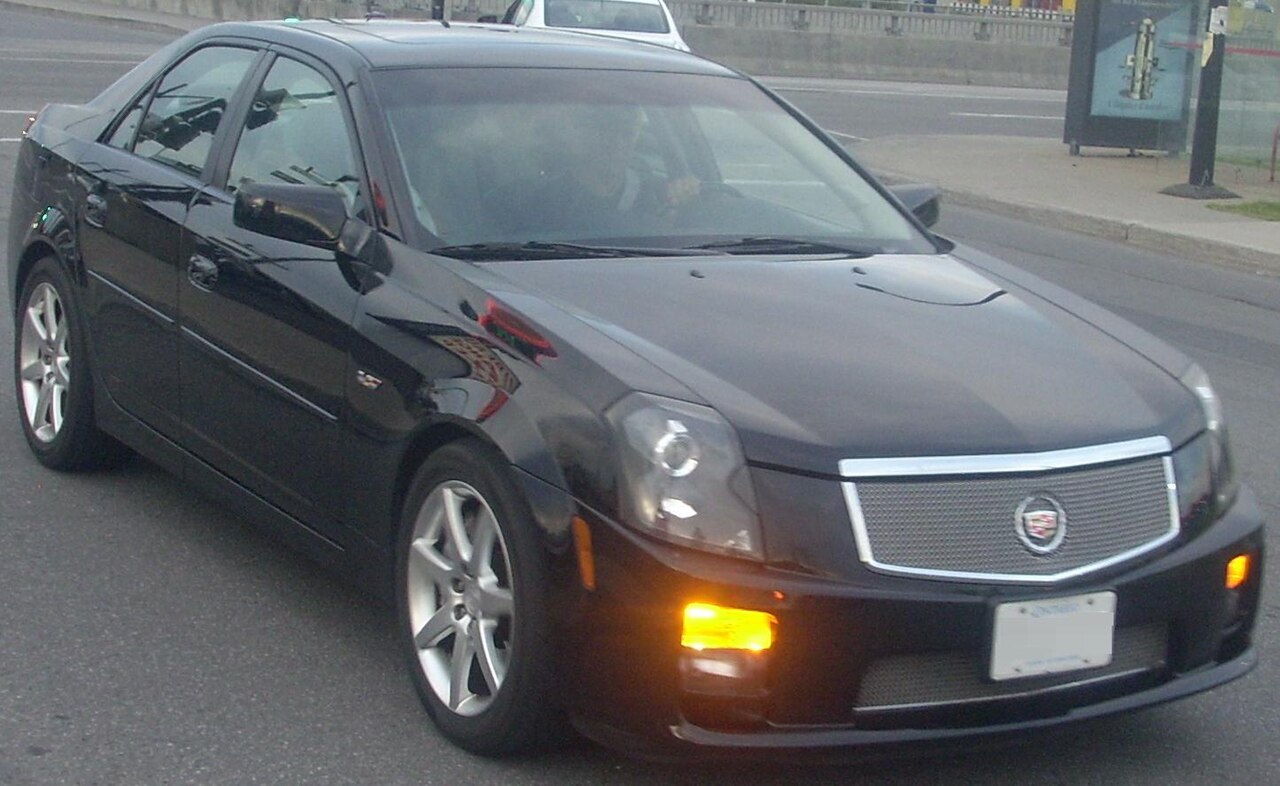
In the supplied photograph, the black sedan keeps its everyday four-door outline. The mesh grille gives the front a distinct texture, while the wheels and lower front openings make the car look more purposeful without obscuring its basic form. That combination is central to its appeal as a design object: the performance identity is concentrated in particular details rather than expressed through a completely different passenger body. An exterior view is useful for studying those relationships, even though it cannot authenticate the engine inside an individual surviving car.
The factory equipment record identifies the LS6 and the six-speed manual transmission. The subsequent factory overview documents a move to the LS2 for 2006. That engine change supplies the natural boundary used here. The tally combines the two LS6 model years in the original production table; it is not an arbitrary claim about all first-generation CTS-Vs. This keeps a reader from applying the smaller phase population to a later car with a different factory engine specification.
A collection record should make the distinction easy to see. Record the VIN and model year, the installed engine identification and any matching original paperwork. A later engine replacement deserves its own entry, even if the exterior still resembles the photographed car. The model identity remains useful, but originality is a separate question requiring evidence from the specific vehicle. Transmission and drivetrain records should be kept with that file rather than inferred from a badge alone.
Viewed beside later CTS-V body styles, the LS6 sedan offers a straightforward starting point for the V-Series story. Its roof and passenger compartment are conventional enough that the mechanical change carries much of the narrative weight. The car's interest lies in that tension between a practical sedan silhouette and a performance-focused specification. The photograph illustrates the early model phase without claiming an exact single-year build identity for the pictured example.
Factual identity and engineering references: Source 1 · Source 2 · Source 3 · Source 4.
Specifications and production scope
| Reference year / scope | 2004–2005 |
|---|---|
| Subject | CTS-V LS6 |
| Engineering context | 5.7-litre LS6 V8; 400 hp; six-speed manual; rear-wheel drive |
| Design focus | The original V-Series sedan in its LS6 phase |
| Rarity scope | 6,703 examples for the named 2004–2005 model/body or engine phase only. This is not the output of the full nameplate across other years or the complete Cadillac range. |
| Exact scoped build tally | 6703 |
| Inventory reference | CAD-136 — Verified |
Keeping the collector record useful
A useful CTS-V file separates the model story from the life of an individual vehicle. Record the body or edition designation exactly as it appears in matching documents, then keep clear front, side, rear and cabin photographs with the dates attached. Changes made during restoration deserve their own entries, including the reason for the work and the evidence used. That approach lets future readers compare the physical car with this profile without confusing a present appearance, an original factory specification and an attractive historical association.
Documentary photograph
Cadillac CTS-V from the 2004–2005 LS6 phase; the source identifies this year range rather than an exact single build year. The source image was checked for the pictured body or physical project and its file-specific reuse terms. The visible photograph caption links the photographer, original file and licence so the illustration can be traced independently of the article.
Frequently asked questions
Why does this profile cover two years?
The scope follows the documented LS6 engine phase. The factory change to LS2 creates a meaningful engineering boundary, and the photo source identifies the pictured car as a 2004–2005 CTS-V.
Does the tally include every first-generation CTS-V?
No. It applies to the named LS6 phase only. The later LS2 model years belong outside this profile, so the phase tally must not be reused as the full generation total.
What production scope applies to the 2004 CTS-V LS6?
6,703 examples for the named 2004–2005 model/body or engine phase only. This is not the output of the full nameplate across other years or the complete Cadillac range.
What should a collector document on an individual example?
Keep the vehicle’s identification, body or edition evidence, dated photographs and restoration records together. This CTS-V profile explains the model subject; ownership, original finish and present condition require records that match the individual car being considered.
Does this profile provide a complete original specification?
The specification table records the supported identity and engineering context for this year. An exterior photograph cannot establish every optional feature or later component change. Preserve any matching build record before adding more precise equipment claims to the CTS-V LS6 file.
Who took the photograph and how may it be reused?
The bundled image is credited to Bull-Doser, under Public domain on its individual Commons file page. Keep the visible named credit and licence link. The supplied source version has no local image edits; background signage and photographer marks remain where present.
Sources
- Original manufacturer document, contemporary firsthand account or factory-communicated production record
- Original manufacturer document, contemporary firsthand account or factory-communicated production record
- Original manufacturer document, contemporary firsthand account or factory-communicated production record
- Original manufacturer document, contemporary firsthand account or factory-communicated production record
- Photograph: '04-'05 Cadillac CTS-V.jpg
Related Cadillac profiles
Compare the body forms and clearly scoped identities in 2009 Cadillac CTS-V Sedan and 2011 Cadillac CTS-V Coupe. Each profile keeps its own year, photograph and rarity scope.
Built in limited numbers
6,703 examples for the named 2004–2005 model/body or engine phase only. This is not the output of the full nameplate across other years or the complete Cadillac range.
Gallery
Specifications
Factory specifications may vary by model year, market and configuration.
Identity & production
- Official model
- CTS-V LS6