2003 Cadillac Sixteen Concept
Explore the 2003 Cadillac Sixteen Concept: history, design, scoped rarity, collector details, specifications and an authentic photograph with full credit.
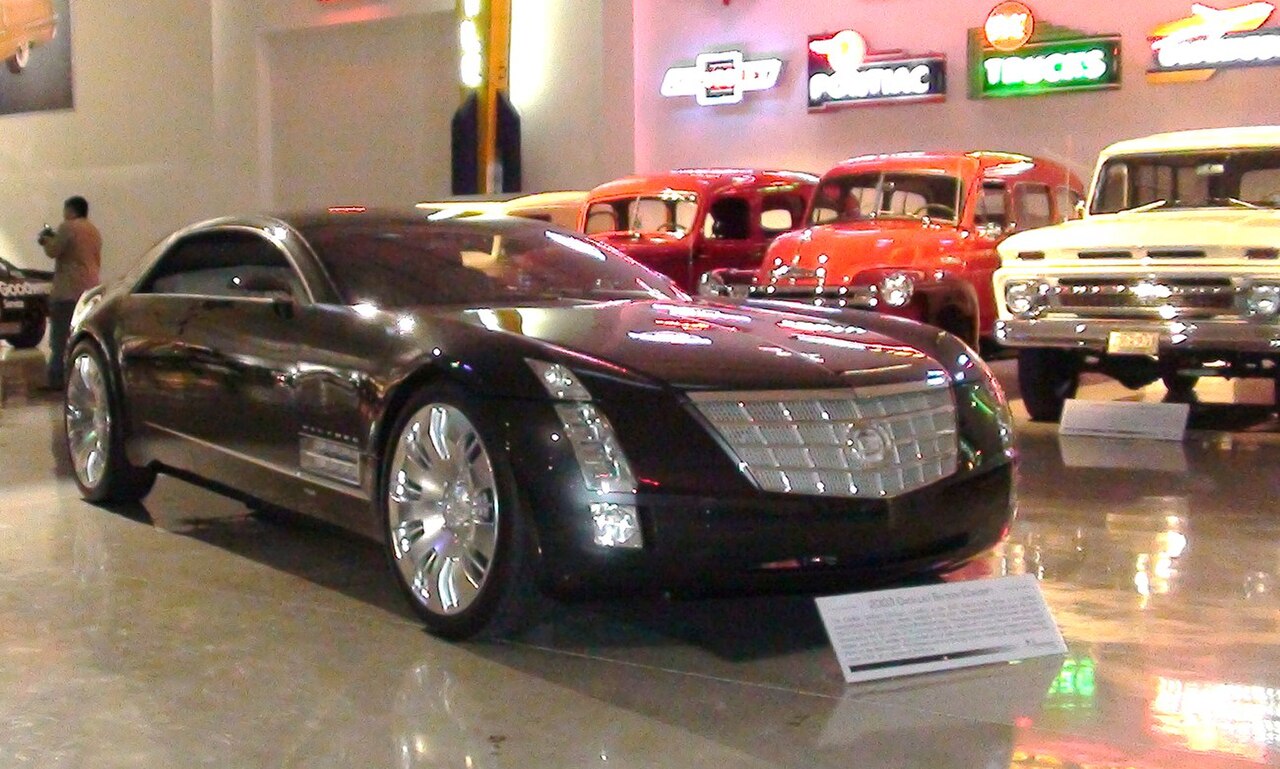
The 2003 Cadillac Sixteen concept takes the idea of a magnificent engine compartment and makes it the centre of a modern four-door body. Its long hood, low roof and carefully controlled brightwork create a restrained outline around an extraordinary mechanical proposal. This profile documents the original physical concept project, with the photographed museum car illustrating its form.
History, identity and design
The museum photograph gives the Sixteen an unusually useful setting. Surrounded by other historical vehicles, it can be read as an object with its own proportions rather than a promotional image isolated from scale. The hood stretches ahead of a compact-looking cabin, and the body surfaces remain relatively calm. Large wheels and narrow lamp forms supply visual punctuation. These are observations from the supplied view; they do not depend on a promise about how a future production car would perform.
GM's historical account dates the debut to the 2003 Detroit Auto Show and describes the XV16 engine beneath a two-panel aluminium hood. The published output figures are manufacturer concept ratings. They belong to that experimental engineering story, rather than to an independently tested customer car. Sixteen is especially interesting because the engineering identity and the exterior proportions reinforce one another: the unusually long front volume makes the engine proposal visible even with the hood shut.
The name invites comparison with Cadillac's earlier sixteen-cylinder vehicles, but the objects should remain separately catalogued. An original Series 452 road car and the modern Sixteen concept do not share a production population. For a reader browsing a vehicle collection, that distinction preserves the historical link without converting it into a misleading claim of mechanical continuity. The concept can be understood as a deliberate return to a powerful luxury theme while retaining its own materials, proportions and project date.
An archive file for Sixteen should collect dated exterior views, cabin details and any documented public appearances under one project identity. Close views of the hood opening would be valuable additions because they show how the design accommodates its central mechanical idea. The bundled image is retained as a documentary museum view, including its surroundings. It establishes a visible physical design, while the manufacturer's retrospective supplies the supported debut and engineering context.
Factual identity and engineering references: Source 1.
Specifications and production scope
| Reference year / scope | 2003 |
|---|---|
| Subject | Sixteen Concept |
| Engineering context | 13.6-litre XV16 V16; manufacturer concept rating 1,000 hp and 1,000 lb-ft |
| Design focus | A modern luxury statement around sixteen cylinders |
| Rarity scope | Original identified physical concept project represented by its documented show car. One archive project record; exact worldwide prototype manufacturing total is not established and is left unset. |
| Exact scoped build tally | Unset; see scoped eligibility note |
| Inventory reference | CAD-134 — Verified |
Keeping the collector record useful
A useful Concepts file separates the model story from the life of an individual vehicle. Record the body or edition designation exactly as it appears in matching documents, then keep clear front, side, rear and cabin photographs with the dates attached. Changes made during restoration deserve their own entries, including the reason for the work and the evidence used. That approach lets future readers compare the physical car with this profile without confusing a present appearance, an original factory specification and an attractive historical association.
Documentary photograph
2003 Cadillac Sixteen concept in the GM Heritage Center; later museum view. The source image was checked for the pictured body or physical project and its file-specific reuse terms. The visible photograph caption links the photographer, original file and licence so the illustration can be traced independently of the article.
Frequently asked questions
Are the quoted power figures road-test results?
They are the manufacturer ratings reported for the experimental concept engine. This profile does not turn them into a measured acceleration result or a specification for a retail Cadillac.
Is Sixteen part of the 1930 V-16 production tally?
No. The modern concept and the historical road-car programmes are distinct identities. Their names create a useful design comparison, while their dates and rarity scopes remain separate.
What production scope applies to the 2003 Sixteen Concept?
Original identified physical concept project represented by its documented show car. One archive project record; exact worldwide prototype manufacturing total is not established and is left unset.
What should a collector document on an individual example?
Keep the vehicle’s identification, body or edition evidence, dated photographs and restoration records together. This Concepts profile explains the model subject; ownership, original finish and present condition require records that match the individual car being considered.
Does this profile provide a complete original specification?
The specification table records the supported identity and engineering context for this year. An exterior photograph cannot establish every optional feature or later component change. Preserve any matching build record before adding more precise equipment claims to the Sixteen Concept file.
Who took the photograph and how may it be reused?
The bundled image is credited to Tino Rossini, under CC BY 2.0 on its individual Commons file page. Keep the visible named credit and licence link. The supplied source version has no local image edits; background signage and photographer marks remain where present.
Sources
- Original manufacturer document, contemporary firsthand account or factory-communicated production record
- Photograph: GM Heritage Center – 020 – Cars – Cadillac Sixteen.jpg
Related Cadillac profiles
Compare the body forms and clearly scoped identities in 2000 Cadillac Imaj Concept and 2011 Cadillac Ciel Concept. Each profile keeps its own year, photograph and rarity scope.
Built in limited numbers
Original identified physical concept project represented by its documented show car. One archive project record; exact worldwide prototype manufacturing total is not established and is left unset.
Gallery
Specifications
Factory specifications may vary by model year, market and configuration.
Identity & production
- Official model
- Sixteen Concept